The issue of sustainable development combined with environmental protection deserves careful consideration in all sectors of human activity, particularly infrastructure, buildings, and transportation. Indeed, in the drive to preserve the environment, the introduction of natural fiber materials as substitutes for conventional materials in various areas of construction is essential due to their renewable and biodegradable nature. Several national and international studies have been conducted on the physical, mechanical, chemical, and biochemical characteristics of composite materials for possible use in construction. However, these studies have not been fully exploited due to a lack of research on the long-term behavior of these composite materials. The objective of this study is therefore to determine the optimal fiber content that will maximize the mechanical performance of the clay sand-fiber composite. Two geosourced materials, “Zinvié clay sand rated S1” and “Abomey-Calavi clay sand rated S2,” and one bio-sourced material, “coconut fibers rated FNC,” were used. The methodology adopted consists of adding the fibers to the matrix in the form of random inclusions. The different fiber contents considered were as follows: 0.6%, 0.8%, 1%, 1.2%, and 1.4%. After formulation, 4×4×16 cm³ test specimens and cylindrical test specimens were prepared and stored at a temperature of 20°C until maturity to prevent cracks due to shrinkage. The test specimens were subjected to physical and mechanical tests, and the results obtained show that coconut fibers reduce the clay content and permeability of the materials and increase their flexural strength, compressive strength, bearing capacity, and shear strength.
Recent decades have been marked by a growing awareness among civil society, economic actors, and the scientific community of the negative impacts of human activities on the environment and the urgent need to reduce them. It is therefore necessary to link projects in the industrial, transport, energy, and construction sectors to a sustainable development approach 1 particularly in the construction sector, which is characterized by buildings dozens of stories high, engineering structures stretching thousands of kilometers, and roads built with high-performance materials 2. These advances lead to excessive and uncontrolled exploitation of available natural resources and the release of large quantities of greenhouse gases into the environment as a result of the manufacture of chemical and synthetic products, all of which leads to environmental degradation by altering its natural state.
In the drive to preserve the environment for sustainable development, the development of plant fiber composite materials to replace conventional materials in various areas of construction is essential. Recognizing their potential to contribute to better environmental management, several countries are interested in developing these types of composite materials 1, 3, 4. This is the case with the use of natural fibers such as flax, sisal, jute, and hemp in large proportions in the manufacture of various automotive parts 5. In the construction engineering sector, natural fibers are used as inclusions (bulk or sheets) in soils to reinforce their mechanical performance 1.
Coconut fiber, used as a reinforcing fiber, is gaining importance in composite research and industry due to its versatility, biodegradability, and high availability. It offers many potential advantages, particularly in terms of environmental performance. Coconut fiber is considered the most durable natural fiber 6 because it has the highest lignin content compared to other natural fibers, which makes it resistant to microbial attack and decay.
Several studies have been conducted on the physical and mechanical characteristics of coconut fibers for use in the construction industry, but research on coconut fiber-enhanced clays for use in roadbeds remains undeveloped by the scientific community.This study sheds light on the influence of coconut fibers on the physical and mechanical characteristics of clayey sands intended for use in roadbeds.
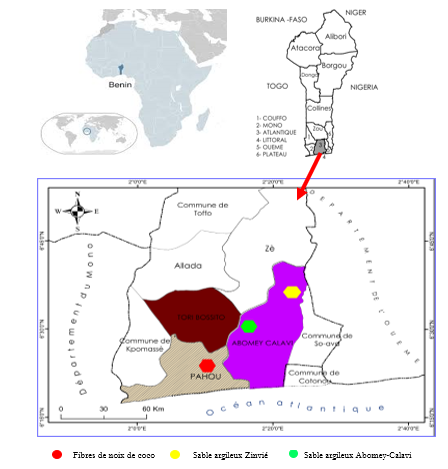
The materials and objects covered in this study come from the Atlantic Department. With an area of 3,233 km² and a population of 1.397 million in 2013, this southern department is bordered to the south by the Atlantic Ocean and to the west by the Mono Department. Lake Ahémé, the Couffo River, and the Aho River form its natural boundaries. The clay sands used in this study were collected in Zinvié and Abomey-Calavi. The coconut husks were collected in the commune of Ouidah, specifically in Pahou (Figure 1).
2.2. Study MaterialsTwo geosourced materials and one biosourced material are used in this study:
- Clayey sand from Zinvié (S1);
- Clayey sand from Abomey-Calavi (S2);
- Coconuts harvested in Pahou.
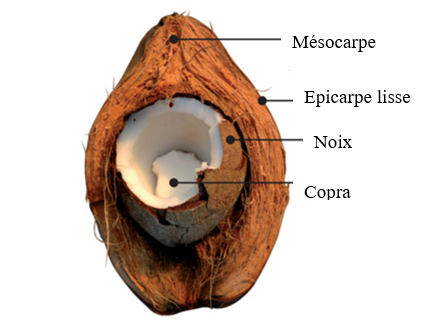
- The coconut fibers used are extracted from the mesocarp, the fibrous husk surrounding the coconut (FNC).
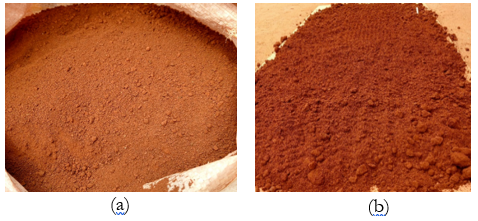
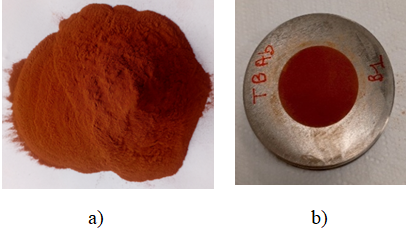
The coordinates of the soil sampling points are 6°34'33’’N; 2°21'33’' E for Zinvié and 6°28°14.63°N; 2°19°56.98°E for Abomey-Calavi. Photo 2 shows views of these soils.


|


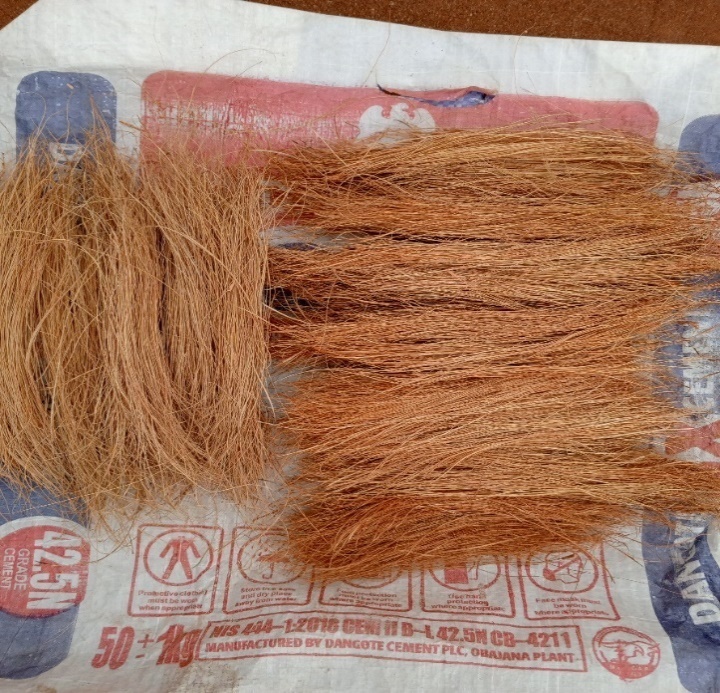
There are several methods for extracting plant fibers. The fibers covered in this study are extracted from the fibrous husk surrounding the coconut, also known as the mesocarp or coir, using the water retting method (Polyacht and Vaihuti Fresh, 2024), which is a biological method for separating the smooth epicarp from the fibers. The fiber extraction process begins with the harvesting of ripe coconuts. These are dried before the debarking operation, which consists of removing the fibrous envelope (coconut husk) surrounding the coconut. This step is followed by retting of the mesocarps, which consists of marinating them in fresh water or sea water for a week to facilitate the breakdown of the gummy substances that bind the fibers together. After retting, the fibers are defibrated mechanically or manually. The resulting fiber bundles are cleaned and washed thoroughly, then dried in the open air. This method of fiber extraction produces stronger fibers with a rough surface that provides good adhesion between the matrix and the fibers.
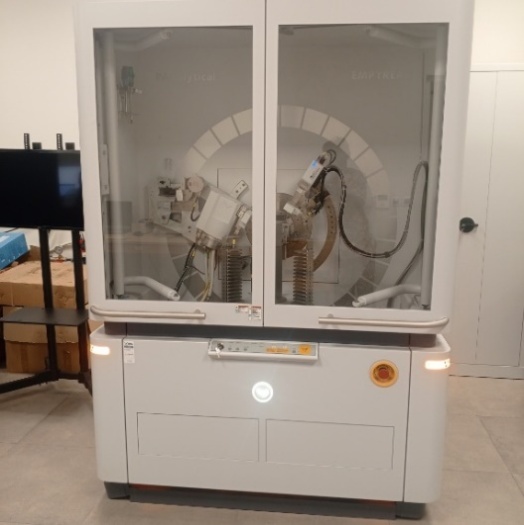
2.4. Microstructural Characterization of Clayey Sands: X-ray DiffractionX-ray diffraction is a technique used to analyze the crystallographic structure and determine the crystalline phases of a crystalline material. In a crystal, due to the regular arrangement of molecules in the crystal lattice, the stacking of atoms forms crystalline planes, which promotes X-ray diffraction.

Microstructural characterization of Diffraction tests on clay sands were carried out in the X-TechLab laboratory in Sèmè-City using a PANalytical Empyrean powder diffractometer consisting of a system with a Ka1 monochromatic beam with a wavelength of λ=1.5406Å recorded between 3° and 70° 2θ, with a minimum angular step of 0.002. The material used for the anode is copper.

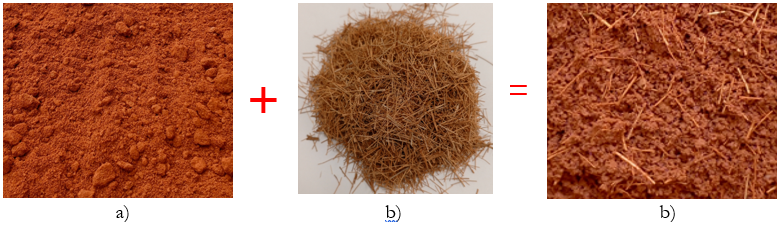
In this study, the formulation consisted of determining the quantity of fibers for a given mass of soil based on the reinforcement percentage of the composite material in question. The composite materials to be formulated will be used in the road foundation layer, so the formulation must be carried out under the same conditions as those for the implementation of composites during road construction.
The quantities of materials used in each mixture are determined using the formulas below, based on the Proctor references for each composite.
 |

For the formulation of composite materials from clay sands S1 and S2, the different coconut fiber contents are: 0%; 0.6%, 0.8%, 1.0%, 1.20%, and 1.4%. These percentages were chosen based on previous work (Djohore C. A., et al., 2018). Table 1 summarizes the different formulations.
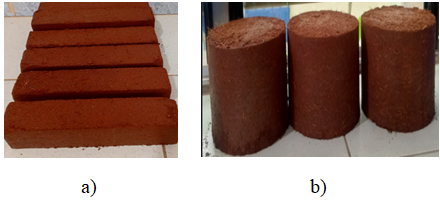
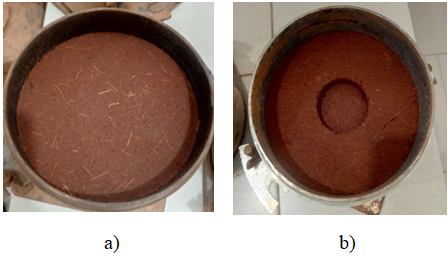
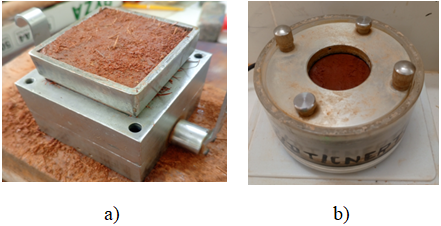
For this study, two types of test specimens were prepared for physical and mechanical testing of the composites. These were 4x4x16 cm³ specimens and cylindrical specimens compacted using Proctor energy in CBR molds.

The incorporation of coconut fibers into a sand-clay matrix can influence the consistency of the composite material. The consistency parameters of composite materials in this study were determined in accordance with standard NF P 94-051, which describes the procedures for determining the plasticity limit, liquidity limit, and plasticity index of fine soils in the laboratory. The sandy clay is passed through a 400μm sieve and the sieved material is soaked in water for 24 hours to facilitate the settling of fine particles (silt and clay) from the sand. The material obtained after soaking is thoroughly mixed to reduce the large particles to fine particles before adding the fibers. After incorporating the fibers, the clay sand + fibers mixture is mixed and the consistency parameters of the composite materials are determined according to the procedures described in standard NF P 94-051.
The variable load permeability test is a test that evaluates the ability of composite materials to allow water to pass through. It involves placing the composite material in the permeability measurement cell and then connecting the sample to a water column using a tube. The water level in the tube is measured and the permeability coefficient is determined according to Darcy's law.
This test is performed to assess the porosity of the composite material based on fiber content and fiber-matrix adhesion.
The CBR bearing index is an excellent parameter for assessing the mechanical characteristics of pavement layers. Prior to its determination, once the soil and fibers have been mixed to obtain a homogeneous mixture, the Proctor test is performed to determine the compaction characteristics of the composites. The composite materials formulated according to the compaction references are then compacted in CBR molds and the material test specimens are immersed in water for 96 hours before punching. After 96 hours, the test specimens are subjected to punching to determine the bearing capacity of the composites under the most unfavorable conditions of use.

Shear testing and oedometer testing are performed on composite materials in accordance with standards NF P 94-071 and XP P94-090-1, respectively, in order to assess the influence of coconut fibers on the shear strength and compressibility parameters of clayey sands. For these tests, a core sample is taken using a non-deformable ring from the material specimens compacted in CBR molds.

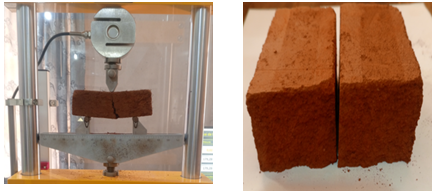
The three-point bending tensile test is performed on 4×4×16 cm3 specimens in accordance with standard EN 196-1. The test consists of gradually applying a force F_tf to the material specimen until it breaks. The force value causing the specimen to break is recorded on the test machine's comparator.
The tensile stress is then calculated using the following formular:
 |
 |
The values of b, h, and l are equal to 40 mm, 40 mm, and 100 mm, respectively.

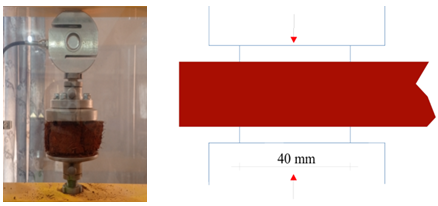
Tests to determine mechanical compressive strength were carried out in accordance with standard EN 196-1 on each half-specimen resulting from three-point flexural tensile testing. A compressive load FNC is gradually applied to a section S until failure. The compressive stress is given by the following formula:
 |
Fcmax=maximum compressive force causing the specimen to crush;
S=section of the specimen. The compressive force is applied to a section measuring 4×4 cm².
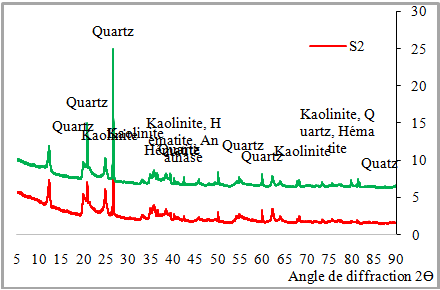
X-ray diffraction on clayey sands S1 and S2 produced the diffractograms shown in Figure 2. The data was processed using X'Pert HighScore software.
The different intensities of the major diffraction peaks recorded made it possible to identify the minerals constituting each material. Clay sands S1 and S2 contain quartz (SiO₂), kaolinite (Al₂Si₂O₅(OH)₄), anatase (TiO₂) and hematite (Fe₂O₃). Clayey sand S2 therefore contains a higher proportion of clay than sand S1. The clay content has a significant impact on the mechanical strength of materials and can affect the mechanical behavior of composite materials.

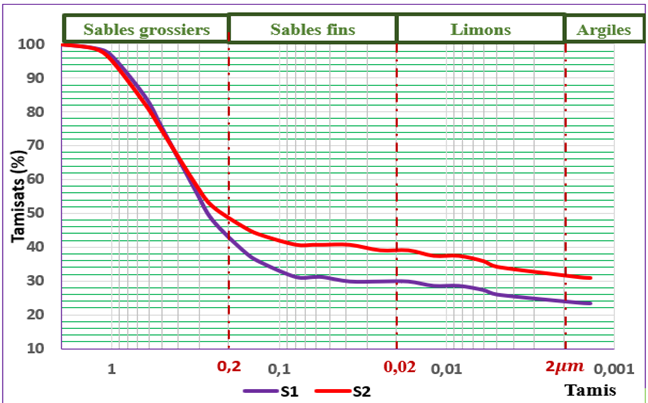
The weight distribution of grains within the clayey sands used in this study was determined using a particle size analysis test. The results obtained after the test are shown in the graph in Figure 3.

The particle size distribution curves are similar, however, the fines content of clayey sands S1 and S2 is 31.12% and 40.80% respectively. Clayey sand S2 has a fines content of over 35%, so its behavior is similar to that of its fine fraction. The fines content of S1 and S2 is over 30%. Based on the classification of materials by grain size described in standard NF P11-300, clay sand S1 consists of 23.77% clay, 6.05% silt, 36.67% fine sand, and 33.51% coarse sand. However, clayey sand S2 consists of 31.55% clay, 7.62% silt, 41.03% fine sand, and 19.80% coarse sand. Clayey sand S2 contains more clay, silt, and fine sand than clayey sand S1. The results of the physical characterization of the clayey sands are summarized in Table 2.
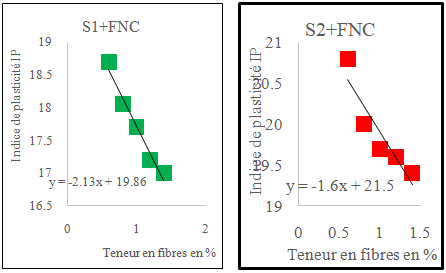
3.2. Physical and Mechanical Characteristics of CompositesThe results obtained from determining the Atterberg limits of composite materials were used to plot curves showing the variation in the plasticity index (PI) as a function of fiber content, as shown in Figure 9.

Analysis of the curves in Figure 9 shows that the plasticity index of composites decreases with fiber content. The plasticity index of clayey sand S1 is 19% in its raw state, but this value drops to 17.7%, a reduction of 2.7%, after the incorporation of 1% coconut fibers. The plasticity index of material S2 in its raw state is 21.5%, but after improvement with 1% fibers, this value decreased to 19.7%, representing a 1.8% reduction in the plasticity of the material. It appears that fibers reduce the plasticity of soils and, consequently, their clay content. There is therefore agglomeration between the fine particles and the coconut fibers after their incorporation into the matrix, which leads to coarse particles and thus reduces the plasticity of the composite materials.
The results of the permeability test are summarized in Table 4 and Table 5.
These results show that S1 clay matrix composites have a lower permeability coefficient than those of S2. In the case of S1+FNC composites, the permeability coefficient increases from 2.04E-06 without fibers to 5.36E-10 after incorporating 1% FNC. This considerable reduction in the permeability of the material is due to the reduction in voids contained in the material in its raw state. After the incorporation of FNC, there is therefore agglomeration between the fine particles and the fibers, resulting in good adhesion between the fibers and the clay matrix. However, in the case of S2+FNC composites, the permeability of the composites decreases gradually as a function of fiber content up to a fiber content of 1%. The decrease in permeability is due to the adhesion between the fibers and the matrix, which reduces the voids at the fiber-matrix interface, preventing water from freely penetrating the composites.
Table 5 shows the level of permeability as a function of the permeability coefficient.
Based on Table 5, the S1+1% FNC and S2+1% FNC composites are impermeable and very slightly permeable, respectively.
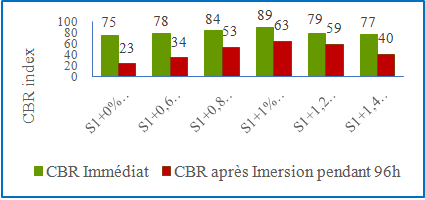
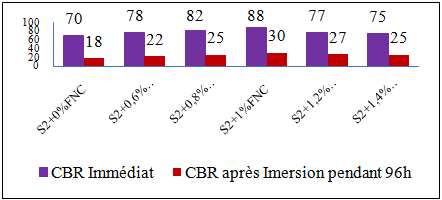
3.3. Mechanical TestsFigure 5 and Figure 6 show the results of the immediate and immersion CBR tests on FNC-enhanced composite materials.


Figure 11 and Figure 10 show that the immediate bearing index of clayey sands S1 and S2 increases from 75 and 70 to 89 and 88, respectively, following the incorporation of 1% FNC. However, the strength of clay sand S1 after immersion in water for four days increases from 23 to 63 with the addition of 1% FNC. At the same time, the strength of clay sand S2 under the same water conditions increases from 18 to 30. The submerged CBR index of clayey sand S1 improved with 1% FNC is close to that of the lateritic soils studied by Mbengue et al 7. in 2021 in Burkina Faso. However, the CBR index after immersion of clay sand S2 improved with 1% FNC is close to that of the lateritic soils studied in 2019 by Hyoumbi et al 8.
FNC significantly improve the strength of S1 and S2 clay sands in the absence of water. This proves that within the matrices, the fibers fully play their reinforcing role and easily adhere to the clay sands. It has been noted that the bearing capacity of S2 sand-clay matrix composites drops considerably when they are subjected to the most unfavorable conditions (presence of water for several hours). In a humid environment, the fibers and clay particles absorb water and swell, which causes the adhesion between the fibers and the matrix to decrease and, consequently, the mechanical strength of the composite to decrease. On the other hand, the decrease in load-bearing capacity is not too noticeable in the case of S1+FNC composites. S1 sandy clay contains fewer fine particles, so there is less water absorption and swelling and, consequently, a smaller reduction in the mechanical strength of the composites 9.
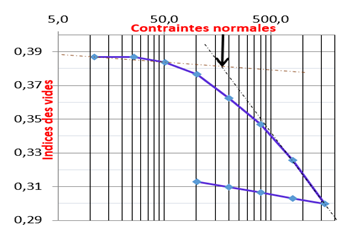
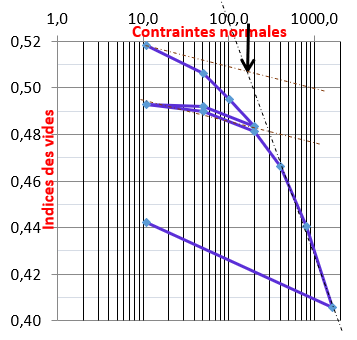
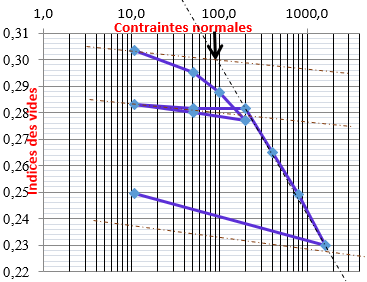
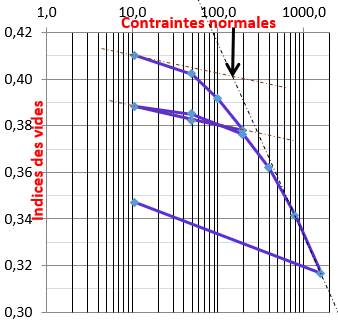
The oedometer tests enabled the following graphs to be plotted.


The compression coefficients, swelling coefficients, and preconsolidation stress of the materials studied are shown in Table 6.
These results show that after incorporating 1% FNC into clayey sand S1, the preconsolidation stress increased from 145 kPa in the unfilled state to 155 kPa, representing a 7% improvement in stress. In the case of clayey sand S2, the preconsolidation stress increased from 99 to 140 kPa, representing a 41% increase in strength. FNC therefore significantly improve the limit stress beyond which materials will undergo irreversible deformation. However, the compression and swelling indices increased slightly after the fibers were incorporated. This is due to the absorption of water by the fibers during the test 10.
The incorporation of FNC into soils is therefore an alternative way of improving the bearing capacity of soils, but they cannot be used in the case of compressible soils such as swelling clays.
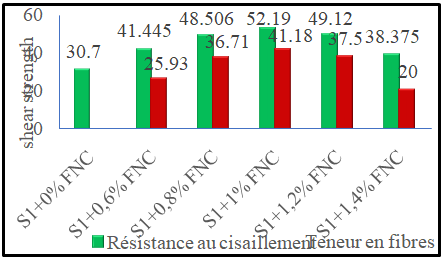
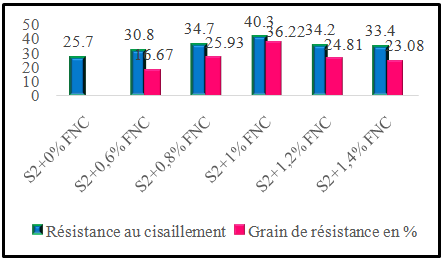
The results of the shear test on composite materials are shown in the graphs in Figures 13 and 14.
The results show that the shear strength of clay sand S1 increases from 30.7 to 52.19 kPa for a fiber content of 1%. This shows that the incorporation of fibers offers a 41.18% increase in shear strength. In contrast, the shear strength of clay sand S2 increases from 25.7 to 40.3 kPa for a fiber content of 1%, representing a 36.22% increase in strength.
These results demonstrate good adhesion between the clay matrices and the FNC.


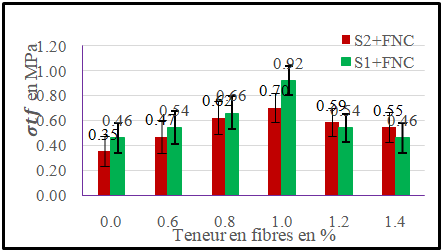
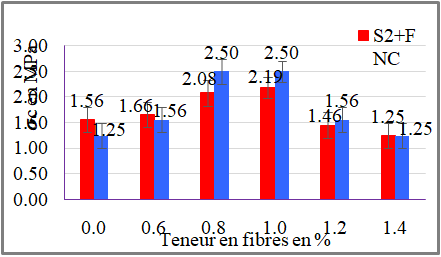
Figure 4.15 and Figure 4.16 show the results of flexural and compressive tests on composite materials.


Analysis of the three-point bending test results shows that for S1+FNC composite materials, the flexural strength increases from 0.46 MPa for a 0% FNC content to 0.92 MPa for a 1% FNC content. In contrast, for S2+FNC composites, the flexural strength increases from 0.47 MPa for a 0% FNC content to 0.70 MPa when the FNC content is 1%. S1 and S2 clay sands have the same flexural strengths before improvement.
Before the sands are improved, the compressive stress of clay sand S1 is 1.25MPa. This stress increases to 2.50 MPa when the soil is improved with 1% FNC. The same observations were made for clay sand S2, where the compressive stress increases from 1.56 MPa to 2.56 MPa after incorporation of 1% FNC. This shows that FNC increases the flexural and compressive strength of soils S1 and S2. It contributes significantly to improving the mechanical behavior of composite materials.
Table 7 summarizes the results of the tests carried out on composite materials.
These results show that FNC have a positive influence on the physical and mechanical characteristics of S1 and S2 clay sand materials. The S1+1%FNC mixture is the optimal mixture.
This research on the influence of coconut fibers on the mechanical characteristics of clay matrices has highlighted several findings. Coconut fibers have a significant influence on the physical characteristics of clay sands, such as Atterberg limits and permeability, as well as mechanical characteristics: flexural strength, compressive strength, bearing capacity, and compressibility characteristics of composite materials. The results of shear tests show good adhesion between coconut fibers and clay sands, especially SA1 clay sand of class B6.
This study therefore reveals that coconut fibers have a greater influence on sands containing fewer fine elements.
| [1] | Khelifi Zakia, “Contribution à l’étude du comportement des sols renforcés à l’aide des fibres végétales d’Alfa,” Université Aboubekr Belkaïd– Tlemcen, 2017. | ||
| In article | |||
| [2] | Ousseynou Cisse, “Caractérisation du comportement hygro-mécanique des fibres liberiennes élémentaires issues du chanvre,” 2016, [Online]. Available: https://theses.hal.science/tel-01294319 | ||
| In article | |||
| [3] | and D. B. Álvarez C., Reyes‐Sosa F. M., “‘Enzymatic hydrolysis of biomass from wood,’ Microbial biotechnology, vol. 9, pp. 149‐156,” 2016. | ||
| In article | View Article PubMed | ||
| [4] | Sodoke Kossi, “ÉVALUATION DU COMPORTEMENT À LONG TERME D’UN MATÉRIAU COMPOSITE À FIBRES NATURELLES,” UNIVERSITÉ DU QUÉBEC, 2017. | ||
| In article | |||
| [5] | Mohammed L. et al., A review on natural fiber reinforced polymer composite and its applications," International Journal of Polymer Science. 2015. | ||
| In article | View Article | ||
| [6] | Somto K., Onukwuli, Charles Chikwendu Okpala et Fred N. Okeagu, “Examen des avantages et des limites de la fibre de coco Matériau de remplissage dans les composites,” 2022. | ||
| In article | |||
| [7] | P. A. Mbengue M. T. M., Messan A., Lawane A., “Characterization of the Lateritic Soil of Kamboinsé (Burkina Faso). In Proceedings of the RILEM International Symposium on Bituminous Materials,” Springer Int. Publ., vol. 27, 2022. | ||
| In article | View Article | ||
| [8] | Hyoumbi W. T., Pizette P., Wouatong A. S. L., Abriak N. E., Borrel L. R., Razafimahatratra F. N., & Guiouillier, T., “Investigations of the Crushed Basanite Aggregates Effects on Lateritic Fine Soils of Bafang Area (West-Cameroon). Geotechnical and Geological Engineering, 37(3), 2147 2164.,” 2019. | ||
| In article | View Article | ||
| [9] | Boufaida Z., “Analyse des propriétés mécaniques de composites taffetas verre / matrice acrylique en relation avec les propriétés d ’ adhésion des fibres sur la matrice,” 2018. | ||
| In article | |||
| [10] | Ahmad J. et Zhou Z., “Mechanical Properties of Natural as well as Synthetic Fiber Reinforced Concrete: A Review », Construction and Building Materials, vol. 333, p. 127353,” 2022. | ||
| In article | View Article | ||
Published with license by Science and Education Publishing, Copyright © 2026 ZETOME Hervé, TANKPINOU KIKI Yvette, BONOU Sourou A. Sidoine and GBAGUIDI S. Victor
 This work is licensed under a Creative Commons Attribution 4.0 International License. To view a copy of this license, visit
http://creativecommons.org/licenses/by/4.0/
This work is licensed under a Creative Commons Attribution 4.0 International License. To view a copy of this license, visit
http://creativecommons.org/licenses/by/4.0/
| [1] | Khelifi Zakia, “Contribution à l’étude du comportement des sols renforcés à l’aide des fibres végétales d’Alfa,” Université Aboubekr Belkaïd– Tlemcen, 2017. | ||
| In article | |||
| [2] | Ousseynou Cisse, “Caractérisation du comportement hygro-mécanique des fibres liberiennes élémentaires issues du chanvre,” 2016, [Online]. Available: https://theses.hal.science/tel-01294319 | ||
| In article | |||
| [3] | and D. B. Álvarez C., Reyes‐Sosa F. M., “‘Enzymatic hydrolysis of biomass from wood,’ Microbial biotechnology, vol. 9, pp. 149‐156,” 2016. | ||
| In article | View Article PubMed | ||
| [4] | Sodoke Kossi, “ÉVALUATION DU COMPORTEMENT À LONG TERME D’UN MATÉRIAU COMPOSITE À FIBRES NATURELLES,” UNIVERSITÉ DU QUÉBEC, 2017. | ||
| In article | |||
| [5] | Mohammed L. et al., A review on natural fiber reinforced polymer composite and its applications," International Journal of Polymer Science. 2015. | ||
| In article | View Article | ||
| [6] | Somto K., Onukwuli, Charles Chikwendu Okpala et Fred N. Okeagu, “Examen des avantages et des limites de la fibre de coco Matériau de remplissage dans les composites,” 2022. | ||
| In article | |||
| [7] | P. A. Mbengue M. T. M., Messan A., Lawane A., “Characterization of the Lateritic Soil of Kamboinsé (Burkina Faso). In Proceedings of the RILEM International Symposium on Bituminous Materials,” Springer Int. Publ., vol. 27, 2022. | ||
| In article | View Article | ||
| [8] | Hyoumbi W. T., Pizette P., Wouatong A. S. L., Abriak N. E., Borrel L. R., Razafimahatratra F. N., & Guiouillier, T., “Investigations of the Crushed Basanite Aggregates Effects on Lateritic Fine Soils of Bafang Area (West-Cameroon). Geotechnical and Geological Engineering, 37(3), 2147 2164.,” 2019. | ||
| In article | View Article | ||
| [9] | Boufaida Z., “Analyse des propriétés mécaniques de composites taffetas verre / matrice acrylique en relation avec les propriétés d ’ adhésion des fibres sur la matrice,” 2018. | ||
| In article | |||
| [10] | Ahmad J. et Zhou Z., “Mechanical Properties of Natural as well as Synthetic Fiber Reinforced Concrete: A Review », Construction and Building Materials, vol. 333, p. 127353,” 2022. | ||
| In article | View Article | ||