This study provides a thorough geological, chemical, and mechanical assessment of the Itobe marble deposit in central Nigeria, with the objective of clarifying its viability as a sustainable resource for high-quality construction materials. The research, which incorporates mineralogical analysis, X-ray fluorescence (XRF), X-ray diffraction (XRD), density and porosity measurements, as well as mechanical testing, identifies calcite as the predominant mineral component, exhibiting negligible impurities. Chemical assays verify a substantial calcium carbonate content, correlating the deposit's composition with recognized requirements for cement manufacturing. Physical analyses reveal minimal porosity and a dense interior structure, suggesting restricted permeability and favorable durability attributes. The mechanical evaluation, including Vickers hardness and strength testing, highlights the marble's advantageous load-bearing capability and durability against surface damage, establishing it as a strong contender for cement production and direct use in structural elements. The positive geological, chemical and mechanical properties combine to make Itobe marble a strategic local material that is suitable for the Nigerian construction industry and may therefore be one of the choices for the development and move towards resource-efficient and sustainable material alternatives. This holistic study sets a reference for the better use of local marble in advanced civil construction.
Marble has been extensively employed in both modern and historical architectural projects due to its durability, aesthetic appeal, and several practical uses. It has been utilized as a construction material for globally acclaimed edifices, including the Parthenon in Greece, the Taj Mahal in India, and numerous other notable monuments in Nigeria. Recently, there has been an escalating demand for locally sourced, economical, and sustainable materials to satisfy the rising requirements for durable and resilient building materials in the construction sector 1, 2, 3. Nigeria, with its rapid urban development and industrialization, has been witnessing an increased demand for raw materials to support infrastructural expansion 4, 5. The central belt of Nigeria is richly endowed with Itobe marble deposits which could offer an opportunity for the localization of raw material sources to meet the increased demand for building and construction materials and to reduce the pressure on the consumption of imported materials 4, 5.
Marble is a metamorphic rock formed when limestone or dolomite recrystallizes due to high heat and pressure. Marble has its unique mineral composition and physical properties that make it an ideal raw material for several construction needs such as floor covering, cladding, sculpture, and as a load-bearing material. Earlier studies proved the dominance of calcite in the Itobe marble deposit and made a general geological, chemical, and textural description of the Itobe marble 6, 7. The lack of detailed studies that comprehensively analyze the mineralogical and chemical aspects of the Itobe marble in conjunction with a robust set of physical and mechanical testing results motivated this work.
It has been emphasized on a global scale that the proper characterization of local marbles must be performed to fully understand its potential for application as an aggregate, a binder substitute, or fine additive in building and construction 1, 2, 3. Marble characterization research has continued to prove that calcite-dominated marble aggregates, when properly processed and dosed, can improve compressive strength, durability, and the overall sustainability profile of cementitious systems and concrete 1, 3. In addition, the substitution of marble for limestone in the manufacture of cement is a further potential strategy for meeting Nigeria’s rising cement demand, helping to empower the local economy, and minimizing the financial costs and environmental effects of hauling away aggregate and other raw materials from other locations in the country 2, 4. In addition to these compositional and mineralogical concerns, many physical and chemical indices that contribute to the durability of the material, such as porosity, density, and mechanical strength, are important aspects that need to be well understood 8. For instance, hardness and low porosity have been found to be strongly related to high levels of resistance to chemical attack, freeze-thaw cycles, and mechanical abrasion, which are all needed in the hostile environments that cement, and concrete are often exposed to in the built environment 1, 3. As a result, well-characterized marble can be used to improve the performance of cement and concrete products while also enhancing their overall sustainability. In light of the above, the main objective of this study was to carry out the characterization of the Itobe marble deposit and perform an in-depth evaluation of its potential as a raw material for use in cement and advanced construction applications. The work involved detailed mineralogical studies of the marble to identify its mineral phases and geological features through petrography and X-ray diffraction (XRD) analysis. The chemical composition of the marble was also determined using X-ray fluorescence (XRF) with an emphasis on the calcium carbonate content and other impurities. The density and porosity of the marble samples were then analyzed as essential physical parameters that could give an indication of their potential performance in real-world construction applications, while mechanical testing was carried out on the marble to better understand its hardness and strength and the degree to which it can be used as an aggregate or cement substitute.
The overall goal of this work is to provide an integrated scientific evaluation of the geological, chemical, physical, and mechanical characteristics of the Itobe marble deposit so that a strong basis for the rational and sustainable exploitation of the Nigerian local resources is created. As a result, the results are expected to inform engineers, architects, and policymakers and support the development of sustainable construction practices using local materials in Nigeria and around the world.
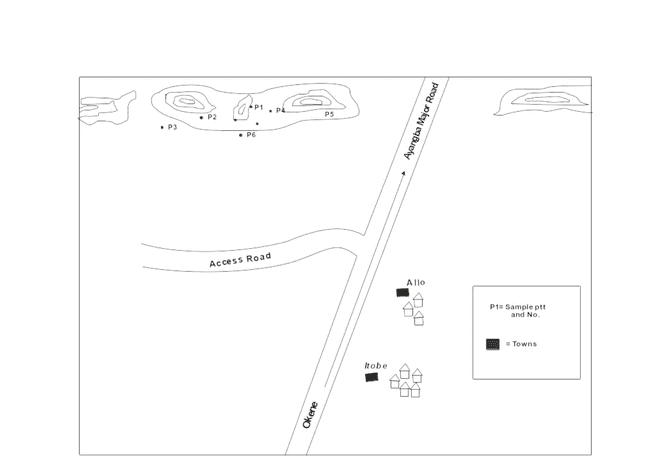
Bulk samples of Itobe marble from Kogi State North Central Nigeria were collected at P1 – P6 as shown in figure 1 through pitting and trenching method. The samples for the analysis carried out on the marble deposit were obtained from pitting at various locations in the deposit, at depth of between 1.8m – 3.0m.

Chemical analysis of the marble deposit from pits 1 to 6 was characterized by X-ray fluorescence (XRF) technique. This technique enables researchers to analyze the exact chemical constituent and discover the occurrence of any impurities in the sample. Chemical analysis was carried out on the pulverized samples of the Itobe marble deposit using Minipal XRF machine.
2.3. Mineralogical AnalysisThe mineralogical analysis of the marble deposit was carried out on the samples obtained from pits 1, 2, 3, 4, 5, and 6 with a Leica microscope to obtain useful information regarding the composition as well as the features of geological samples. Thin sections were produced from the samples at the Department of Geology Technology Lab of University of Jos. We prepared thin sections of the marble sample by cutting a small slice (typically 30 micrometers thick) and affixing it to a glass slide using an adhesive. To prepare the thin segment for microscopy, we polished and grounded it. After that, the thin segment was placed on the microscope stage. To gain a general understanding of the marble's composition and structure, we began with crossed nicols (XN). According to the optical properties of the minerals which include birefringence, hue, and relief, we were able to differentiate betwixt them in the marble. thereafter, to better see the textures and features of the minerals, we shifted to polarized light microscopy. The behavior of minerals was observed under the polarized light by rotating the polarizer and analyzer, thereby exposing different interference hues and extinction patterns. Mineral identification charts, atlases, as well as databases were employed to match the optical properties observed with known mineral features 7. We paid attention to mineral morphology, cleavage, twinning, with other features to help in the identification. We took the photomicrographs of the vital mineral phases for documentation and analysis at 10x.
2.4. X-Ray Diffraction AnalysisTraditionally, the marble sample was ground into a fine powder for XRD measurement to improve the surface area available for X-ray interaction and maintain homogeneity. The powder was later formed into a thin, flat disc and placed on a sample holder so that it could be analyzed. The XRD analysis was performed with an X-ray diffractometer. 0.15418 nanometers fixed wavelength was applied to bombard the sample with copper Kα radiation, and the resulting diffraction pattern was recorded.
2.5. Density MeasurementUsing the Archimedes method, the marble specimens' density was calculated. Itobe marble samples A, B and C were crushed using cone crusher. The crushed samples were further pulverized using a pulverizing machine.10g each of the pulverized marble samples of A, B and C was used for the test. 20cl of water was measured in a 50cl of a measuring cylinder. 10g each of the pulverized samples was placed into the 20cl of water in the measuring cylinder. For each of the sample’s A, B and C, the mass of the samples in water, and the displacement volume were taken and recorded. This procedure was repeated 5 times for each of the samples, and the average value of the density was evaluated using equation 1.
 | (1) |
The marble samples were sectioned into a cube of size 2cm by 1cm using a logitech GTS1 cut off slab. The samples were dried after sectioning or cutting. The dried samples were put in the desiccator to cool after drying prior to measuring the dry weight value using a weighing balance.
The samples were put in a beaker filled with water and boiled for 2 hours. Thereafter, the hot water was decanted, replaced with water (0oC), and a new weight of the sample suspended in the beaker was taken using a densometer. The sample was lightly dried, and then a new weight value was taken and recorded. Apparent porosity (p) was determined with equation 2.
 | (2) |
Where W= weight of the sample after boiling, D= weight of the sample before boiling and S= weight of the sample suspended in water.
2.7. Mechanical Testing of the Marble DepositThe compressive, tensile, and yield strengths of the marble was measured with the 500KN Universal Test Machine. Samples of marble representative for testing were made in accordance with ASTM 9, 10. The appropriate fixtures were installed on the Universal Testing Machine for the test. In case of the compressive strength testing, we placed the cylindrical marble specimen between the compression platens of the testing machine, ensuring proper alignment. A compressive load of 120kN was applied to failure at a constant loading rate of 0.4 MPa/s. For correct alignment to measure tensile strength, the marble specimen with a rectangular shape was clamped between the grips of the testing machine. A tensile stress of 15kN was applied to failure at a constant loading rate of 1 mm/min. The data obtained from tensile tests were used for the yield strength evaluation. The Vickers hardness testing method was used to find the hardness value of the marble. We cut the sample to a suitable flat polished surface for testing. The surface of the marble was polished to a smooth and flat surface to eliminate any roughness or irregularities that could affect the hardness test results. Later we place the sample on the stage of the Vickers hardness testing machine and positioned the indenter directly over the surface of the sample. We apply a load of 8kgf to the indenter for 15 seconds in a gradual manner to avoid any shock load.
The indentation then formed a square-shaped indentation above the surface of the marble sample. We measured the diagonals of the indentation with an optical measuring device several times, and the value of the Vickers hardness was determined with the average of these measurements using equation 3.
 | (3) |
Where HV = Vickers hardness, P = Applied load, and d = Average diagonal of indentation


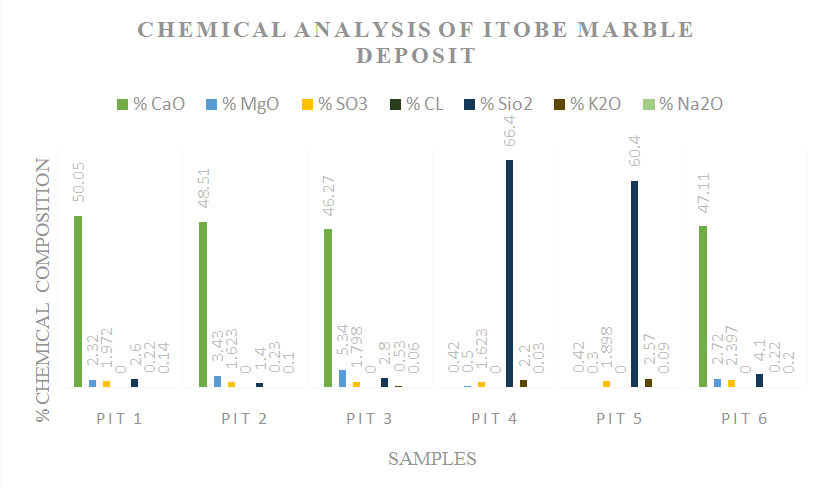
It can be observed from the XRF analysis of the marble deposit in figure 2 that pits 1, 2, 3, and 6 contain 50.05, 48.51, 46.27, and 47.11% CaO respectively with less proportion of quartz (SiO2) which can serve as the sources of impurity in cement manufacturing. Meanwhile, pits 4 and 5 both contain 0.42% CaO with 66.40 and 60.40% SiO2 respectively. The chemical constituents of Itobe marble deposit as shown in figure 2 also contain a small quantity of MgO, which indicates the presence of dolomite. The chemical constituents of the itobe marble deposit in pits 1, 2, 3, and 6 are suitable for the manufacturing of cement, with much occurrence of calcium carbonate (CaCO3) along with the minute association of other important minerals 11, 12, 13. The occurrence of calcium carbonate is essentially of great advantage, since it is a basic raw material to produce cement, which is an important component of concrete materials used in construction industry.
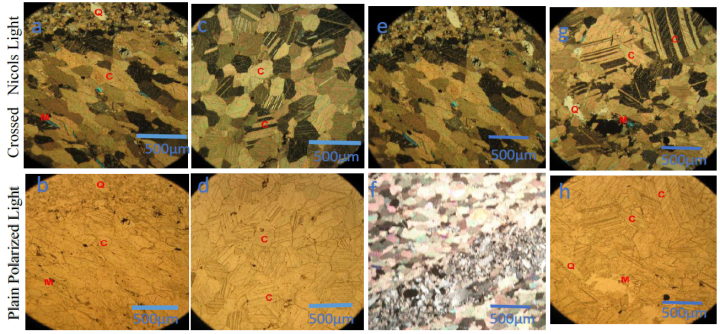
It was revealed that the Itobe marble deposit consists of anhedral to sub-hedral crystalline calcite, minor quartz, biotite and graphite through mineralogical analysis. In some parts of the deposit, the calcite grain shows weak preferred alignment while quartz grains show lineation and occur in thin bands. There are generally sharp grain boundaries between the grains of calcite bearing minerals in the rock as can be observed in plate 1 (a-h).
The micrographs of the marble deposit as shown in plate 1(a-h) consist almost entirely of crystalline calcite (C) with varied grain-size, along with minor inclusion of Muscovite (M), and Quartz (Q) as the major constituent of the marble sample as shown in plate 1. The grain-size varies between 0.5 – 3.5mm. The marble has a foliated structure due to the concentration of quartz, biotite and Muscovite (M) along planes parallel to the regional foliation. The mineralogical composition is essentially calcite with little dolomite, quartz and minor occurrence of mica which is quite good for cement production.
The mineralogical analysis shows that marble deposits from pits 1 and 6 are predominantly calcite (C) and quartz (Q) with small amount of mica (M) minerals Plate 1(a, b, g, h). However, pit 2 majorly contains calcite (C) plate 1 (c, d), meanwhile, no trace of calcite could be observed in pit 3 plate 1(e, f). Comparing the result with the industrial specification of calcium carbonate for cement production base on RMRDC 13, the Itobe marble with CaO content ranging between 45% - 50% as shown in the chemical analysis has promising indices of being a good source of raw material for cement production, having met the world specification of (51.94 of CaO).
The mineralogical composition of the Itobe marble deposit emerges from the annals of time. Containing an abundance of calcium carbonate, which is the distinctive feature component of limestone, this deposit is like the basic raw material used for production of cement. Beside just chemical composition, the geological source of the marble deposit reveals an embroidery of physical features that buttresses its capacity for being a suitable raw material in cement industry 14, 15, 16.
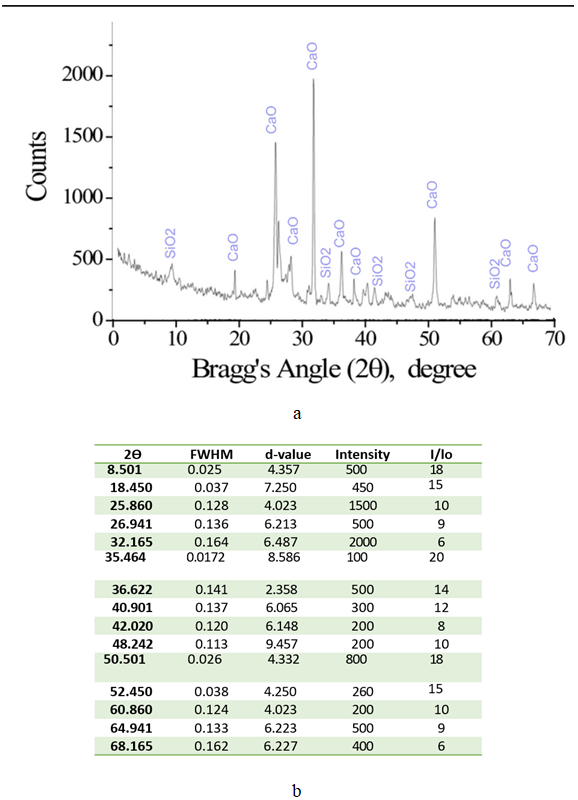
We obtained basic information about the mineralogical constitution of the marble deposit along with its crystalline structure through the XRD characterization. The marble is mainly composed of calcite along with little content of dolomite. It also contains other accessory minerals that contribute to its distinctive properties. The diffraction pattern obtained from the marble deposit contains array of peaks akin to the lattice direction within the associated minerals. The peaks are denoted by their position (2θ angle) and intensity figure 3 (a & b). The positions corresponding to the optimum peaks of CaO are 25.90, 32.17, and 50.5 degrees with their respective peaks as 1500, 2000, and 800. Meanwhile, the positions observed for quartz (SiO2) are 8.50, 35.50, 42.02, 48.24, and 60.00 whereas their respective peaks are 500, 100, 200, 200, and 200 as indicated in figure 3a. The intensity of diffraction peaks provides qualitative and quantitative information about the relative abundance of minerals in marble figure 3b. In figure 3a the dominant mineral phase of the marble is typically calcite (CaCO3) whereas, the Itobe marble deposit also contains certain amount of quartz (SiO2) as shown from the XRD analysis. Other minerals, which include dolomite, mica, and various associate minerals may also be present in minute quantity, depending on the geological history of the marble deposit 11.
The d-values as indicated in figure 3b lies in identifying and characterizing the mineral phases that occur with the marble sample. Through the measurement of the d-values in line with the diffraction peaks in the XRD pattern of the marble sample, engineers and researchers can compare these values to known reference patterns of minerals in databases like ICDD, and PDF 17, 18. The characterization of this marble deposit with the XRD technique generally shield more light concerning its mineralogical constituent, crystalline structure, as well as the quality of the deposit, promoting a wide range of its applications in construction industry, materials science, geology and others.
Marble, being a material that occurs naturally possesses several physical properties that contribute to its aesthetic appeal, durability, and suitability for different applications. The flexibility of choice in the material for different decorative, architectural, and sculptural uses, which may vary from flooring, wall cladding, countertop, monuments and sculptures, is mostly influenced by the physical characteristics of the marble. In this study, however, samples (A, B, and C) were obtained from pits 1, 2 and 6 with a higher percentage of calcium carbonate content to study the density and porosity of the marble.
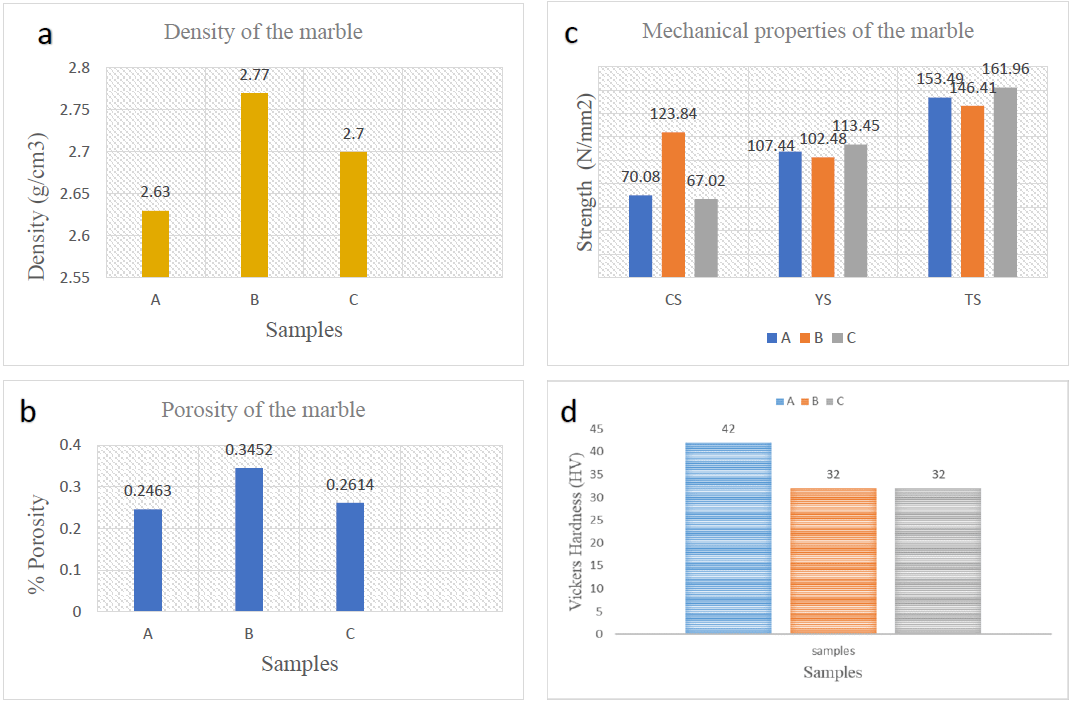
The normal range of density for cement may fluctuate depending on the cement’s chemical composition, the fineness of the particle size, the process of manufacturing and the specific types (ordinary Portland cement, blended cement, and specialty cement). However, for OPC, the typical density falls within the range of approximately 3.10 to 3.25 grams per cubic centimeter (g/cm³) 19, 20, 21. The density of Itobe marble deposit as indicated in figure 4a are respectively 2.63, 2.77, and 2.70 g/cm3 for samples A, B, and C. The density of the marble deposit is approximately within the range of the density of Portland cement. The density of Itobe marble is also within the range of the typical density of marble, which is between 2.5 to 2.7 grams per cubic centimeter (g/cm³) 22, 23. Hence, the marble deposit could be an alternative source of raw material for the cement industry. Density plays a vital role in cement; a property needed from the diverse sections of the construction process. The building consists of design and building layout, logistics scheduling, material selection, and process and environmental assessments. Density is one of the factors which directly impacts the stability, performance, and sustainability of concrete structures. Cement density plays an essential role in construction engineering and materials. Density is a key factor that affects the workability of the concrete mix. A well-proportioned mix with appropriate density will have good workability, which is critical for the construction process 24, 25. It will be easier to place, compact, and finish the concrete on-site. Engineers must understand the density of cement for the precise prediction of the structural response and performance of the concrete structure when subjected to different loading conditions.
It is generally very crucial to control the porosity while cement production and application to guarantee the desirable mechanical stability, durability, and longevity of structures. The porosity can be mitigated with techniques like adequate curing, use of additives, and proper mix design, thereby promoting the performance of cementitious materials. The attributes and service performance of cement in diverse applications are greatly affected by the porosity. Generally, high porosity results in a decrease in strength due to the creation of voids within the cement matrix, thereby reducing the capacity of the material to withstand load. Hence, the compressive strength of the porous cement is lesser than that of the denser ones 26. High porosity provides an opportunity for water, chemicals, and gases to penetrate easily into the cement matrix, leading to degradation with time. Hence, leading to spalling, cracking, and corrosion of reinforcement materials, eventually minimizing the durability of structures 27.
Porous cement is more permeable to liquids and gases compared to denser cement. Challenges like water ingress can result from an increase in permeability, thereby causing interior damage to cement matrix and encourage the growth of harmful microorganisms 24. The freeze-thaw resistance of cementitious materials is also being influenced by porosity. When water passes through the pores within the cement matrix and freezes, it dilates, putting pressure on the surrounding material and causing damage. High porosity could result in an increase in potential The freeze-thaw resistance of cementitious materials has been further linked to porosity. As water moves through pores within the cement matrix and freezes it expands and exerts pressure on the surrounding material, damaging the cement 28. High porosity could, therefore, equate to greater potential freeze-thaw damage, with cracking and degradation of the cement matrix. Porous cement is also more susceptible to chemical attack by acids, sulfates and chlorides that can penetrate the porous cement structure and lead to chemical reactions which may accelerate the cement matrix and the deterioration of its performance over time 29, 30, 31. Fineness, hydration conditions, composition, and other additives may contribute to variation in porosity of cement. Meanwhile, the typical values of porosity for OPC generally range from 5% to 20% 21. The porosity of the Itobe marble deposit as shown in figure 4b are 0.2463, 0.3452, and 0.2615 for samples A, B, and C respectively. The porosity of the Itobe marble is within the range of the porosity of the OPC and therefore could be a suitable raw material for cement production. It is important to note that the porosity of cement is usually much less than that of concrete, because cement is a finely ground powder with very low void content. The cementitious materials such as concrete and mortar have higher porosity when compared to other construction materials because they have extra pore spaces when cement is mixed with aggregate and water.
Safety, performance and service life of the structures that are built of concrete for a construction project can be majorly affected by the mechanical characteristics of the cement. Engineers as well as material scientists have been analyzing and designing cement and concrete mixes for an improved efficiency in a wide range of applications and environmental conditions. Cement is a binding material used in concrete, and has various mechanical properties, which are significant for construction as well as engineering uses. We evaluated the mechanical properties of samples A, B, and C that were respectively taken from pits 1, 2, and 6. The results of some of the mechanical properties of the marble deposit examined are discussed below.
One of the most crucial properties of cement that enables it to withstand axial loads or resist crushing when undergoing compressive forces is the compressive strength. High compressive strength is required to ensure structural integrity and load-bearing ability of concrete structures. Compressive strength is needed to understand the performance and longevity of concrete that comprises of cement as a vital component. The specific compressive strength of cement paste, that is the mixture of cement and water before it sets may vary according to factors that include curing conditions, cement type, water-cement ratio, and testing methods. However, it must be pointed out that cement paste on its own is not mainly used as a structural material, but instead as a binding agent in concrete. The compressive strength of concrete, in which cement is part of its components, is a paramount parameter for structural design and construction purposes. The compressive strength of cement paste at different epochs can range from approximately 20 N/mm2 to over 70 N/mm2 base upon factors that include cement type, curing conditions, and testing procedures according to the American Concrete Institute (ACI). The compressive strength obtained in this work as shown in figure 4c are 70.08 N/mm2, 123.84 N/mm2, and 67.02 N/mm2 respectively for samples A, B, and C. Therefore, the compressive strength of Itobe marble deposit is within the range of the standardized compressive strength of cement as indicated by ACI 32.
Compressive strength is a key parameter in structural design calculations for concrete structures. The properties of cement dictate the strength of concrete and directly affect the structural performance and safety of buildings, bridges, dams, and other infrastructure.
Compressive strength improves the stability and durability of concrete structures against diverse environmental factors, such as freeze-thaw cycles, chemical exposure, and abrasion. Superior compressive strength specifically promotes longevity, minimized permeability, and improves service life of concrete structures 27. Compressive strength testing is of great significant in quality assurance and performance monitoring of concrete during construction and all through its service life 33.
Hardness is a crucial characteristic feature of cement since it has impact on diverse areas of concrete performance; such areas include abrasion resistance, surface wear, durability, bond strength, surface finish, and aggregate selection. The optimization and understanding of the hardness of cementitious materials play a vital role in ascertaining the reliability, durability, and the performance of concrete structures in difference construction purposes. Typically, cementitious materials exhibit Vickers hardness values in the range of 20 to 100 HV (Vickers hardness), although values outside this range may also be observed depending on water-cement ratio, curing conditions, and the presence of supplementary cementitious materials (e.g., fly ash, slag) 34, 35. However, the approximate ranges of Vickers hardness values for different cementitious materials are shown in table 1.
However, the hardness of the marble deposit investigated in this work are 42, 32, and 32 HV for samples A, B, and C respectively (figure 4d). Hence, this marble deposit will be a good source of raw material for cement production.
Hardness influences the resistance of a material to abrasion that is significant for surfaces subjected to wear and erosion. In the applications of cement for concrete works that include floors, pavements, and other allied high-traffic areas, the hardness of cementitious materials could impact their capability to resist abrasion from vehicles, foot traffic, with other mechanical forces. Generally, the harder cement surfaces possess good abrasion resistance, thereby improving durability and extending service life 36. The hardness of a cementitious surface can affect the surface durability against wear and damage due to friction, impact, or scratching. The wear of the surface can be mitigated by a higher hardness, thus reducing the probability of surface deterioration, spalling, and cracking during service life. This is often a requirement for concrete surfaces which can be found on dams, bridges, highways, and other structures that are exposed to environmental and mechanical actions 37.
Hardness promotes the longevity of cementitious materials by enhancing their resistance to surface damage, deformation, and penetration. A harder cement matrix is less prone to surface deterioration, chemical attack, and weathering, thereby leading to improved lasting service performance and minimizing concrete structures maintenance requirements 38. The hardness of cementitious materials could affect their bond strength with aggregates, strengthening materials, coatings, and adhesives. Good adhesion together with interfacial bonding can be enhanced via high hardness value thereby improving the mechanical properties and structural stability in concrete constituents like slabs, beams, and columns. This is very crucial to guarantee efficient transfer of load and shear resistance, tensile, and compressive forces 39. Hardness affects the surface finish of cementitious materials, influencing their smoothness, texture, and appearance. Harder cement surfaces tend to possess smoother finishes with minimal porosity and surface irregularities, improving good-looking appearance and providing good substrate conditions for successive coatings, overlays, and decorative treatments 40. The overall hardness of the resulting concrete can be influenced by the hardness of aggregates used in concrete mixtures. Therefore, the selection of aggregates with proper hardness properties is required for achieving desirable concrete performance characteristics such as strength, durability, and workability. The harder aggregates like quartz or granite may promote the hardness and abrasion resistance of concrete, especially in heavy-duty applications.
The specific yield strength of cementitious materials significantly vary based upon factors like particular kind of cementitious material, its composition, conditions of curing, and testing methods. However, for Portland cement concrete, the typical yield strength can range from about 17.23 MPa to 41.37 MPa. This is the range of the yield strength for common concrete mixes being used in diverse construction applications that include structural elements such as beams, columns, and slabs 41, 42. For high-strength concrete mixes, which are engineered for specific applications requiring greater strength, the yield strength can exceed 41.37 MPa and may even reach up to 68.94 MPa or higher 41, 43. Meanwhile, the yield strength obtained in this work as indicated in figure 4c are 107.44 MPa, 102.48 MPa, and 113.45 MPa for samples A, B, and C respectively. The Itobe marble deposit possesses huge yield strength that surpass that of Portland cement concrete and those of high strength concrete mixes.
Yield strength is also utilized in the construction of reinforced concrete structures. It is considered during the design of beams, columns, slabs, and other structural components. The yield strengths of the concrete and reinforcement materials are evaluated to guarantee that the structure can withstand the applied loads without significant deformation or failure 32. It also affects the load-bearing capacity and final failure mechanism of the concrete structures 21. The concrete also deforms elastically underloading until its yield point after which plastic deformation is experienced 44. The maximum level of stress that the material can withstand without transformation occurs at its yield strength, which provides more information about the behavior of the structures under different loading conditions 21.
Material selection and optimization in concrete mix design is greatly affected by yield strength. The selection of proper types and proportions of aggregates, cementitious materials, and admixtures, can enable structural engineers to tailor the yield strength of concrete to meet requirements of a project, for example strength, durability, and environmental conditions 45. The incorporation of yield strength data into analytical models with design processes can assist the structural engineers to investigate the behavior of concrete structures subjected to various loading conditions and appropriately maximize design parameters 46.
The tensile strength of the Itobe marble deposit for samples A, B, and C are respectively 153.49MPa, 146.41 MPa, and 161.96 MPa as shown in figure 4c. The tensile strength is an important property since it demonstrates the ability of cementitious materials like concrete to withstand pulling or stretching forces. Though concrete is very strong in compression, it is rather weak in tension. The structural engineers and builders can leverage on the understanding of the tensile strength of cement to investigate the service performance and longevity of concrete structures, most importantly when subjected to conditions that involve tensile strength, for example while loading, temperature differences, or seismic activity. Higher tensile strength in cement helps to resist the formation and propagation of cracks within concrete structures. The integrity of the structure can be compromised by cracks, thereby resulting to structural failure in service if not addressed properly. The maintenance and sustainability of the general stability and structural integrity of concrete elements like beams, slabs, and columns are largely dependent on the tensile strength 47. To prevent structures subjected to diverse loads from failure, superior tensile strength is needed 48. The tensile strength of Portland cement is approximately within 1.5 MPa to 5 MPa. Nevertheless, there could be a variation in these values based on some factors that include the age of the concrete, the mix proportions, and the conditions of curing 21. The marble deposit of Itobe has a superior tensile strength when compared with the tensile strength of Portland cement. Hence, this marble deposit will be a good source of raw material in the manufacturing of cement for the construction industry.
We have characterized Itobe marble deposit to investigate its usefulness in construction materials using diverse characterization techniques that include microscopy analysis, XRF, XRD, density, porosity, and mechanical property investigation. Characterizing and testing the Itobe marble deposits allowed us to determine their mineralogical composition. Marble is connected to the existence of calcite, dolomite, and other minuscule minerals. The mineralogical makeup of a material is essential to comprehend to predict how it will perform in a building environment. The Itobe marble deposit’s chemical composition was analyzed with XRF, which aided in the identification of elements like calcium and magnesium, as well as the possible existence of trace elements. This is important for understanding how well the marble will perform in a certain building application and how reactive it is with other substances. The density and porosity test we conducted revealed the compactness and permeability of the marble. These properties are significant for determining the material’s strength, durability, and appropriateness for a variety of building applications. The marble’s capacity to resist a variety of loading conditions was tested using a mechanical characteristics assessment that included compressive strength, yield strength, tensile strength, and hardness. This information is necessary for ensuring that the stability and performance of the building materials created from the marble deposit are maintained. Overall, the Itobe marble deposit has some positive characteristics that make it suitable for use in the construction industry. It has mineralogical, chemical, and microstructural characteristics, as well as the mechanical characteristics, density, and porosity, that make it a good option for various building applications.
| [1] | Corinaldesi, V., Moriconi, G., & Naik, T. R. (2010). Characterization of marble powder for its use in mortar and concrete. Construction and Building Materials, 24(1), 113–117. | ||
| In article | View Article | ||
| [2] | Khan, A., Patidar, R., & Pappu, A. (2021). Marble waste characterization and reinforcement in low density polyethylene composites via injection moulding: Towards improved mechanical strength and thermal conductivity. Construction and Building Materials, 269, 121229. | ||
| In article | View Article | ||
| [3] | García-Negrete, C., Beltrán-Guzmán, D., Peñate-Vásquez, L., López-Figueroa, J., Montiel-Cardozo, W., & Cantero López, P. (2024). Characterization of waste marble fine particles and their incorporation into concrete mixes for the circular economy. Journal of Southwest Jiaotong University, 59(5), Article 12. | ||
| In article | View Article | ||
| [4] | Emmanuel-Alonge, T., Joseph, D., Dada, E., Baba, J., Victor, A., & Uzuh, F. D. (2019). Chemical analysis of Itobe limestone deposit for potential in cement manufacturing. International Research Journal of Pure and Applied Chemistry, 20(1), 1–8. | ||
| In article | View Article | ||
| [5] | Onimisi, M., Abaa, S. I., Obaje, N. G., & Sule, V. I. (2015). A preliminary estimate of the reserve of the marble deposit in Itobe area, Central Nigeria. Journal of Geology & Geophysics, 4(4), https://www.longdom.org/open-access/a-preliminary-estimate-of-the-reserve-of-the-marble-deposit-in-itobe-area-central-nigeria-40138.html. | ||
| In article | |||
| [6] | Ige, O. A. (2018). Petrographic and Geochemical Characterization of Marble from Itobe, Nigeria: Implication for Industrial Application. Journal of African Earth Sciences, 147, 282-292. | ||
| In article | |||
| [7] | European Commission. (2021). European Atlas of the Natural Stone Resources in the European Union: Itobe Marble Deposit. Publications Office of the European Union. | ||
| In article | |||
| [8] | Sufian, M., Ullah, S., Ostrowski, K. A., Ahmad, A., Zia, A., Śliwa-Wieczorek, K., Siddiq, M., & Awan, A. A. (2021). An experimental and empirical study on the use of waste marble powder in construction material. Materials, 14(14), 3829. | ||
| In article | View Article PubMed | ||
| [9] | ASTM International, "ASTM C170-20, Standard Test Method for Compressive Strength of Dimension Stone," Annual Book of ASTM Standards, vol. 04.07, 2020, pp. 200-205. | ||
| In article | |||
| [10] | ASTM International, "ASTM C39/C39M-19, Standard Test Method for Compressive Strength of Cylindrical Concrete Specimens," Annual Book of ASTM Standards, vol. 04.02, 2019, pp. 100-105. | ||
| In article | |||
| [11] | Deer, W. A., Howie, R. A., & Zussman, J. (2013). Rock-Forming Minerals: Non-Silicates. Geological Society of London. | ||
| In article | |||
| [12] | ASTM International: ASTM C25/C25M - Standard Test Methods for Chemical Analysis of Limestone, Quicklime, and Hydrated Lime. | ||
| In article | |||
| [13] | Raw Materials Research and Development Council Technical Brief on Minerals in Nigeria, November, 2001. | ||
| In article | |||
| [14] | Ural, N. & Yakşe, G. (2020). Utilization of marble piece wastes as base materials. Open Geosciences, 12(1), 1247-1262. | ||
| In article | View Article | ||
| [15] | Memmi, Emanuele Papi; (2011) Mineralogical, petrographic and geochemical characterisation of white and coloured Iberian marbles in the context of the provenancing of some artefacts from Thamusida (Kenitra, Morocco). European Journal of Mineralogy; 23 (6): 857–869. | ||
| In article | View Article | ||
| [16] | Deer, W.A., Howie, R.A. and Zussman, J. (1992) An Introduction to the Rock forming Minerals. Longman Scientific & Technical, London, pp. 696. | ||
| In article | |||
| [17] | Jenkins, R., & Snyder, R. L. (1996). Introduction to X-ray powder diffractometry. John Wiley & Sons. | ||
| In article | View Article | ||
| [18] | Tabbagh, A. (1991). X-ray diffraction analysis of soils and clays. Springer Science & Business Media. | ||
| In article | |||
| [19] | ASTM International: ASTM C150/C150M - Standard Specification for Portland Cement. | ||
| In article | |||
| [20] | Indian Standards: IS 269:2015 - Specification for Ordinary Portland Cement, 33 Grade. | ||
| In article | |||
| [21] | Mehta, P. K., & Monteiro, P. J. M. (2014). Concrete: Microstructure, Properties, and Materials (4th ed.). McGraw-Hill Education. ISBN-13: 978-0071797870. | ||
| In article | |||
| [22] | ASTM C97/C97M-20, "Standard Test Methods for Absorption and Bulk Specific Gravity of Dimension Stone," ASTM International, 2020. | ||
| In article | |||
| [23] | Bates, R. L., Jackson, J. A. and Rogers, J. J. W. (1984) "Dictionary of Geological Terms," American Geological Institute, 3rd Edition. | ||
| In article | |||
| [24] | Neville, A. M. (2011). Properties of Concrete (5th ed.). Pearson Education Limited. ISBN 978-0-273-75356-6. | ||
| In article | |||
| [25] | ACI Committee 211. (2013). ACI 211.1-91 (Reapproved 2009): Standard Practice for Selecting Proportions for Normal, Heavyweight, and Mass Concrete. American Concrete Institute. | ||
| In article | |||
| [26] | Scrivener, K., and Snellings, R. (2015). Supplementary Cementing Materials. Woodhead Publishing. | ||
| In article | |||
| [27] | Mindess, S., Young, J. F., & Darwin, D. (2003). Concrete (Second Edition). Prentice Hall. | ||
| In article | |||
| [28] | Zhang, M.-H., and Islam, J. (2012). Sustainable Concrete: The Role of Performance-Based Specifications. CRC Press. | ||
| In article | |||
| [29] | Taylor, H.F.W. (1997). Cement Chemistry. Thomas Telford Publishing. | ||
| In article | |||
| [30] | ASTM International. ASTM C642 - 13 Standard Test Method for Density, Absorption, and Voids in Hardened Concrete. ASTM International. | ||
| In article | |||
| [31] | Bentz, D.P., and Snyder, K.A. (1999). Influence of Porosity on Diffusion Coefficients in Cementitious Systems. Materials and Structures, 32(3), 196-202. | ||
| In article | View Article | ||
| [32] | American Concrete Institute (ACI). (2014). Building Code Requirements for Structural Concrete (ACI 318-14) and Commentary. Farmington Hills, MI: ACI. | ||
| In article | |||
| [33] | Malhotra, V. M., & Carino, N. J. (2004). Handbook on nondestructive testing of concrete (Second Edition). CRC Press. | ||
| In article | View Article | ||
| [34] | Michael S. Mamlouk and John P. Zaniewski (2017) Materials for Civil and Construction Engineers": Pearson, 4th Edition. ISBN-10: 0134320530, ISBN-13: 978-0134320533. | ||
| In article | |||
| [35] | Neville A.M. and Brooks J.J. (2010) “Concrete Technology": Pearson, 2nd Edition. ISBN-10: 0273732195, ISBN-13: 978-0273732198. | ||
| In article | |||
| [36] | Fournier, B., Lacroix, R., & Pigeon, M. (2019). Influence of binder properties on the abrasion resistance of concrete pavements. Construction and Building Materials, 226, 729-738. | ||
| In article | |||
| [37] | Shi, C., Li, Z., Chen, X., & Wu, Z. (2018). Effects of surface hardness of concrete on its resistance to wear and its mechanisms. Construction and Building Materials, 183, 364-373. | ||
| In article | |||
| [38] | Tam, V. W. Y., Tam, C. M., & Le, K. N. (2020). Durability of concrete: The effect of compressive strength class and chloride exposure on corrosion initiation. Construction and Building Materials, 245, 118338. | ||
| In article | |||
| [39] | Kwan, A. K. H., Wong, Y. L., & Tang, C. A. (2017). Bond strength of corroded reinforcement in concrete. Engineering Structures, 143, 1-12. | ||
| In article | View Article | ||
| [40] | Yang, K. H., & Moon, H. Y. (2016). Effect of cement properties on surface quality of architectural concrete. Cement and Concrete Research, 85, 24-34. | ||
| In article | |||
| [41] | American Society for Testing and Materials (ASTM) ASTM C39/C39M "Standard Test Method for Compressive Strength of Cylindrical Concrete Specimens". | ||
| In article | |||
| [42] | ASTM International. (2021). ASTM C150/C150M-21 Standard Specification for Portland Cement. ASTM International, West Conshohocken, PA. | ||
| In article | |||
| [43] | American Society for Testing and Materials (ASTM) ASTM C618 "Standard Specification for Coal Fly Ash and Raw or Calcined Natural Pozzolan for Use in Concrete”. | ||
| In article | |||
| [44] | Huang, Z., Wu, C., Wang, D., & Qiao, H. (2018). Influence of Concrete Strength on the Flexural Performance of Reinforced Concrete Members. Advances in Civil Engineering, 2018, 1-11. | ||
| In article | |||
| [45] | Vandenbossche, J. M., Van Damme, H., Van den Heede, P., & De Schutter, G. (2017). Influence of concrete composition on the mechanical properties of high-performance concrete. Materials and Structures, 50(6), 249. | ||
| In article | |||
| [46] | Le, K. N., Tam, V. W. Y., & Tam, C. M. (2019). Reliability-based design approach for strength and ductility of reinforced concrete members. Structural Safety, 78, 70-82. | ||
| In article | |||
| [47] | Gürer, G., & Bilgin, Y. (2017). Marble and Its Classification. In M. Ozcelik (Ed.), Dimension Stone Engineering (pp. 1-19). Springer. | ||
| In article | |||
| [48] | Pappalardo, G., & Messina, A. (2018). Marble: A Versatile Material for Architectural Applications. In D. K. Singha & G. Barua (Eds.), Materials for Construction and Civil Engineering (pp. 189-211). Woodhead Publishing. | ||
| In article | |||
Published with license by Science and Education Publishing, Copyright © 2025 Moses Ogbochi Ogar, Abiodun Ogunjinmi, Alfred Navokhi Apaji, Akinwole Ifeoluwa Emmanuel and Joshua Dan Oroshioshemeh
 This work is licensed under a Creative Commons Attribution 4.0 International License. To view a copy of this license, visit
http://creativecommons.org/licenses/by/4.0/
This work is licensed under a Creative Commons Attribution 4.0 International License. To view a copy of this license, visit
http://creativecommons.org/licenses/by/4.0/
| [1] | Corinaldesi, V., Moriconi, G., & Naik, T. R. (2010). Characterization of marble powder for its use in mortar and concrete. Construction and Building Materials, 24(1), 113–117. | ||
| In article | View Article | ||
| [2] | Khan, A., Patidar, R., & Pappu, A. (2021). Marble waste characterization and reinforcement in low density polyethylene composites via injection moulding: Towards improved mechanical strength and thermal conductivity. Construction and Building Materials, 269, 121229. | ||
| In article | View Article | ||
| [3] | García-Negrete, C., Beltrán-Guzmán, D., Peñate-Vásquez, L., López-Figueroa, J., Montiel-Cardozo, W., & Cantero López, P. (2024). Characterization of waste marble fine particles and their incorporation into concrete mixes for the circular economy. Journal of Southwest Jiaotong University, 59(5), Article 12. | ||
| In article | View Article | ||
| [4] | Emmanuel-Alonge, T., Joseph, D., Dada, E., Baba, J., Victor, A., & Uzuh, F. D. (2019). Chemical analysis of Itobe limestone deposit for potential in cement manufacturing. International Research Journal of Pure and Applied Chemistry, 20(1), 1–8. | ||
| In article | View Article | ||
| [5] | Onimisi, M., Abaa, S. I., Obaje, N. G., & Sule, V. I. (2015). A preliminary estimate of the reserve of the marble deposit in Itobe area, Central Nigeria. Journal of Geology & Geophysics, 4(4), https://www.longdom.org/open-access/a-preliminary-estimate-of-the-reserve-of-the-marble-deposit-in-itobe-area-central-nigeria-40138.html. | ||
| In article | |||
| [6] | Ige, O. A. (2018). Petrographic and Geochemical Characterization of Marble from Itobe, Nigeria: Implication for Industrial Application. Journal of African Earth Sciences, 147, 282-292. | ||
| In article | |||
| [7] | European Commission. (2021). European Atlas of the Natural Stone Resources in the European Union: Itobe Marble Deposit. Publications Office of the European Union. | ||
| In article | |||
| [8] | Sufian, M., Ullah, S., Ostrowski, K. A., Ahmad, A., Zia, A., Śliwa-Wieczorek, K., Siddiq, M., & Awan, A. A. (2021). An experimental and empirical study on the use of waste marble powder in construction material. Materials, 14(14), 3829. | ||
| In article | View Article PubMed | ||
| [9] | ASTM International, "ASTM C170-20, Standard Test Method for Compressive Strength of Dimension Stone," Annual Book of ASTM Standards, vol. 04.07, 2020, pp. 200-205. | ||
| In article | |||
| [10] | ASTM International, "ASTM C39/C39M-19, Standard Test Method for Compressive Strength of Cylindrical Concrete Specimens," Annual Book of ASTM Standards, vol. 04.02, 2019, pp. 100-105. | ||
| In article | |||
| [11] | Deer, W. A., Howie, R. A., & Zussman, J. (2013). Rock-Forming Minerals: Non-Silicates. Geological Society of London. | ||
| In article | |||
| [12] | ASTM International: ASTM C25/C25M - Standard Test Methods for Chemical Analysis of Limestone, Quicklime, and Hydrated Lime. | ||
| In article | |||
| [13] | Raw Materials Research and Development Council Technical Brief on Minerals in Nigeria, November, 2001. | ||
| In article | |||
| [14] | Ural, N. & Yakşe, G. (2020). Utilization of marble piece wastes as base materials. Open Geosciences, 12(1), 1247-1262. | ||
| In article | View Article | ||
| [15] | Memmi, Emanuele Papi; (2011) Mineralogical, petrographic and geochemical characterisation of white and coloured Iberian marbles in the context of the provenancing of some artefacts from Thamusida (Kenitra, Morocco). European Journal of Mineralogy; 23 (6): 857–869. | ||
| In article | View Article | ||
| [16] | Deer, W.A., Howie, R.A. and Zussman, J. (1992) An Introduction to the Rock forming Minerals. Longman Scientific & Technical, London, pp. 696. | ||
| In article | |||
| [17] | Jenkins, R., & Snyder, R. L. (1996). Introduction to X-ray powder diffractometry. John Wiley & Sons. | ||
| In article | View Article | ||
| [18] | Tabbagh, A. (1991). X-ray diffraction analysis of soils and clays. Springer Science & Business Media. | ||
| In article | |||
| [19] | ASTM International: ASTM C150/C150M - Standard Specification for Portland Cement. | ||
| In article | |||
| [20] | Indian Standards: IS 269:2015 - Specification for Ordinary Portland Cement, 33 Grade. | ||
| In article | |||
| [21] | Mehta, P. K., & Monteiro, P. J. M. (2014). Concrete: Microstructure, Properties, and Materials (4th ed.). McGraw-Hill Education. ISBN-13: 978-0071797870. | ||
| In article | |||
| [22] | ASTM C97/C97M-20, "Standard Test Methods for Absorption and Bulk Specific Gravity of Dimension Stone," ASTM International, 2020. | ||
| In article | |||
| [23] | Bates, R. L., Jackson, J. A. and Rogers, J. J. W. (1984) "Dictionary of Geological Terms," American Geological Institute, 3rd Edition. | ||
| In article | |||
| [24] | Neville, A. M. (2011). Properties of Concrete (5th ed.). Pearson Education Limited. ISBN 978-0-273-75356-6. | ||
| In article | |||
| [25] | ACI Committee 211. (2013). ACI 211.1-91 (Reapproved 2009): Standard Practice for Selecting Proportions for Normal, Heavyweight, and Mass Concrete. American Concrete Institute. | ||
| In article | |||
| [26] | Scrivener, K., and Snellings, R. (2015). Supplementary Cementing Materials. Woodhead Publishing. | ||
| In article | |||
| [27] | Mindess, S., Young, J. F., & Darwin, D. (2003). Concrete (Second Edition). Prentice Hall. | ||
| In article | |||
| [28] | Zhang, M.-H., and Islam, J. (2012). Sustainable Concrete: The Role of Performance-Based Specifications. CRC Press. | ||
| In article | |||
| [29] | Taylor, H.F.W. (1997). Cement Chemistry. Thomas Telford Publishing. | ||
| In article | |||
| [30] | ASTM International. ASTM C642 - 13 Standard Test Method for Density, Absorption, and Voids in Hardened Concrete. ASTM International. | ||
| In article | |||
| [31] | Bentz, D.P., and Snyder, K.A. (1999). Influence of Porosity on Diffusion Coefficients in Cementitious Systems. Materials and Structures, 32(3), 196-202. | ||
| In article | View Article | ||
| [32] | American Concrete Institute (ACI). (2014). Building Code Requirements for Structural Concrete (ACI 318-14) and Commentary. Farmington Hills, MI: ACI. | ||
| In article | |||
| [33] | Malhotra, V. M., & Carino, N. J. (2004). Handbook on nondestructive testing of concrete (Second Edition). CRC Press. | ||
| In article | View Article | ||
| [34] | Michael S. Mamlouk and John P. Zaniewski (2017) Materials for Civil and Construction Engineers": Pearson, 4th Edition. ISBN-10: 0134320530, ISBN-13: 978-0134320533. | ||
| In article | |||
| [35] | Neville A.M. and Brooks J.J. (2010) “Concrete Technology": Pearson, 2nd Edition. ISBN-10: 0273732195, ISBN-13: 978-0273732198. | ||
| In article | |||
| [36] | Fournier, B., Lacroix, R., & Pigeon, M. (2019). Influence of binder properties on the abrasion resistance of concrete pavements. Construction and Building Materials, 226, 729-738. | ||
| In article | |||
| [37] | Shi, C., Li, Z., Chen, X., & Wu, Z. (2018). Effects of surface hardness of concrete on its resistance to wear and its mechanisms. Construction and Building Materials, 183, 364-373. | ||
| In article | |||
| [38] | Tam, V. W. Y., Tam, C. M., & Le, K. N. (2020). Durability of concrete: The effect of compressive strength class and chloride exposure on corrosion initiation. Construction and Building Materials, 245, 118338. | ||
| In article | |||
| [39] | Kwan, A. K. H., Wong, Y. L., & Tang, C. A. (2017). Bond strength of corroded reinforcement in concrete. Engineering Structures, 143, 1-12. | ||
| In article | View Article | ||
| [40] | Yang, K. H., & Moon, H. Y. (2016). Effect of cement properties on surface quality of architectural concrete. Cement and Concrete Research, 85, 24-34. | ||
| In article | |||
| [41] | American Society for Testing and Materials (ASTM) ASTM C39/C39M "Standard Test Method for Compressive Strength of Cylindrical Concrete Specimens". | ||
| In article | |||
| [42] | ASTM International. (2021). ASTM C150/C150M-21 Standard Specification for Portland Cement. ASTM International, West Conshohocken, PA. | ||
| In article | |||
| [43] | American Society for Testing and Materials (ASTM) ASTM C618 "Standard Specification for Coal Fly Ash and Raw or Calcined Natural Pozzolan for Use in Concrete”. | ||
| In article | |||
| [44] | Huang, Z., Wu, C., Wang, D., & Qiao, H. (2018). Influence of Concrete Strength on the Flexural Performance of Reinforced Concrete Members. Advances in Civil Engineering, 2018, 1-11. | ||
| In article | |||
| [45] | Vandenbossche, J. M., Van Damme, H., Van den Heede, P., & De Schutter, G. (2017). Influence of concrete composition on the mechanical properties of high-performance concrete. Materials and Structures, 50(6), 249. | ||
| In article | |||
| [46] | Le, K. N., Tam, V. W. Y., & Tam, C. M. (2019). Reliability-based design approach for strength and ductility of reinforced concrete members. Structural Safety, 78, 70-82. | ||
| In article | |||
| [47] | Gürer, G., & Bilgin, Y. (2017). Marble and Its Classification. In M. Ozcelik (Ed.), Dimension Stone Engineering (pp. 1-19). Springer. | ||
| In article | |||
| [48] | Pappalardo, G., & Messina, A. (2018). Marble: A Versatile Material for Architectural Applications. In D. K. Singha & G. Barua (Eds.), Materials for Construction and Civil Engineering (pp. 189-211). Woodhead Publishing. | ||
| In article | |||