The COVID-19 pandemic has changed the narrative of work globally till date. SARS-CoV-2, the virus that causes the deadly infection depends on the level of exposure risk for transmission. This has resulted in several work place preventive and control guidelines which led to the popularity of the Work from Home (WFH) initiative with over 9 months of the year 2020 spent in lock down working from home globally. Many organizations recorded significant operational cost savings with the WFH system, hence the reluctance of most organizations to fully revert to the in-office work model after the lockdown was relaxed. Some organizations still operate a hybrid model till date. This study provides an insight into the role of Building Information Modelling (BIM) and Cloud Computing in the successful implementation of a hybrid work model amongst Architectural firms. It also examines the readiness of architectural firms to operate the hybrid work model and the possible barriers to its successful implementation. The survey questionnaire method was adopted for data collection with the target population consisting of architectural firms in Lagos State, Nigeria. Findings revealed that the utilization level of the cloud-based file storage and sharing system within the BIM work process is still very low amongst architectural firms with less than 20% of the respondents actively operating on a cloud-based server. The relative index (RI) analysis deployed to rank the factors delaying the transition of firms to a cloud-based system revealed high setup and maintenance cost as the highest factor with a mean score of 4.74 and RI value of 0.95. Having in mind other inherent collaborative benefits of the cloud-based data systems, the study in conclusion makes a case for the need for architectural firms to invest in their office IT Infrastructure knowing fully well that investment made is recoverable with time from the daily operational cost savings that the hybrid work model offers. The study recommends greater awareness of the cloud server system amongst architectural firms’ top-level management.
The aftermath of the global lockdown due to the COVID-19 pandemic has presented most industries and organizations with a significant challenge which is the need to create a balance between the usual physical office work setup and the work from home (WFH) model. The Architecture, Engineering and Construction (AEC) Industry is not exempted from this global challenge. Work From Home (WFH) came into prominence during the covid period as a precautionary measure by the government to reduce the risk of spreading the deadly virus 1, 2, 3. WFH was not popular amongst most organizations prior to the pandemic. It was only known amongst Information Technology (IT) Professionals and was adopted by very few IT Organizations 4. WFH however gained sharp, steady and global popularity after the covid outbreak 5, 6, 7.
Despite the lifting of the global lockdown, WFH however appear to be a concept that has come to stay due to the advantages recorded by various organizations at the peak period of the COVID pandemic. Surveys across most organizations revealed that WFH led to drastic reduction in commuting time to the work place and an increase in time spent on office work and personal activities 8. For mega cities with high traffic situations like Lagos, preliminary background investigation revealed that less time spent in traffic also led to a quality health life, increased concentration and time for families which most people never had before the covid outbreak. On the part of various companies and organizations, there is a drastic reduction in the monthly office expenses that goes on diesel purchase and other office utility requirements. Due to this, most companies have had to move the larger percentage of their workforce from the usual in-office setup to a WFH setup. This led to an increase in the utilization of digital technology means for meetings 4. Digital Platforms such as Microsoft Teams, Zoom, Google Meet etc all became popular for the conduct of online meetings, webinars and conferences as against physical attendance which was the usual norm before the pandemic. Significant cost savings for organizations during the peak period of the covid outbreak was therefore predominant. 7 categorized the advantages of the work from home initiative under 3 factors namely work-life balance, improved work efficiency and greater work control.
The Architecture, Engineering and Construction (AEC) Industry also went through all these named impacts that COVID had on other sectors. While the Consulting arm of the AEC sector was able to adjust and utilize WFH to carry on with daily work routines during the lockdown, there were no alternative options for Construction Site Workers to carry on their usual construction activities other than to stay at home. With the lifting of the lockdown order, construction site workers resumed work but with great caution and strict adherence to social distancing rules, usage of nose mask and hand sanitizers. Till date, architectural firms and other related service companies are still trying to find a balance between work from home (WFH) setup and the usual physical office attendance.
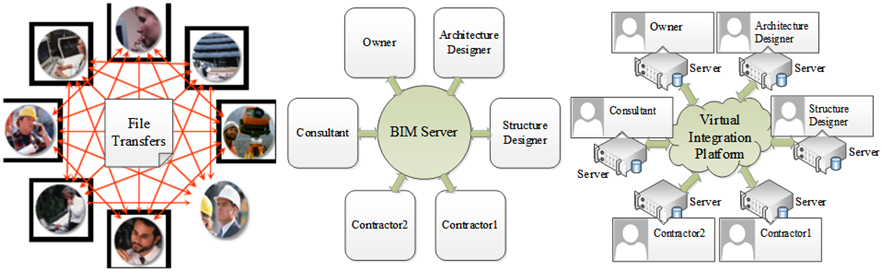
During the first wave of the covid-19 pandemic with the total lockdown imposed, most organizations were working from home. This eventually changed to a hybrid model during the 2nd and 3rd wave of the pandemic after the lockdown was eventually relaxed. A hybrid model is the combination of working from home and the usual in-office work model. Prior to the COVID-19 pandemic, in-office workplace setup was traditionally identified as the productivity hub of enterprises 9. After the emergence of the covid pandemic, large number of companies have found the Hybrid model to improve productivity, efficiency and output 10. It also helps to foster the quality health and mental well-being of employees. The covid pandemic has since shifted the priorities of AEC Firms towards a remote and collaborative environment in which employees can continue to be productive within the comfort of their homes. The popular file-based data transfer method has over the years come with various disadvantages such as incapability of managing data redundancy and inconsistencies 11. The centralized BIM Service approach helps to solve the file-based data sharing problems but with the limitation of incessant data permission requests when obtaining documents and drawings from other project team members. The distributed BIM Service method came as an improvement of the centralized model whereby different professional disciplines have their separate servers which essentially constitutes a virtual integration platform. Figure 1 shows a representation of the 3-file accessibility and sharing system.
The need for a more collaborative method of work has become more imperative with the rising complexities of the multi-disciplinary nature of the industry coupled with the challenges posed by the covid pandemic emergence. BIM have the capacity to facilitate project delivery and the efficiency of project stakeholders through its collaborative advantage which in turn improves productivity and foster sustainability 12. The Cloud BIM system can not only visualize and manipulate BIM models through the web without time and distance limitations, it also provides easy to-use web services for the various project participants, including construction companies, business owners and architectural companies, to access and view project information effectively and efficiently via the web 13. BIM’s ability and capacity to enhance easier and faster project file accessibility, editing and safety is further boosted with the advent of cloud computing technology. 11 explained that the application of Cloud Computing in BIM Service helps to achieve optimal performance at relatively low cost. It enables project team members access project files irrespective of their locations.
This study aims to assess the readiness of Architectural Firms in Lagos State for a hybrid work model. To achieve the research aim, the following objectives were derived:
i) To determine the demographic characteristics of the sampled firms
ii) To examine the readiness of architectural firms in Lagos State to operate a hybrid work model
iii) To identify migration barriers to a cloud-based server system by Architectural Firms in Lagos State Nigeria.
To satisfy the research aim and objectives, a carefully designed web based structured survey questionnaire was deployed as the data gathering instrument for the study. The target population was selected architectural firms in Lagos State, Nigeria. A total of 140 correctly filled questionnaire was retrieved from the data gathering process. The questionnaire was designed on a 5-point Likert rating scale comprising of a range from 1 = Not Applicable, 2 = Rarely Applicable, 3 = Undecided, 4 = Applicable, 5 = Greatly Applicable. The data was analyzed using descriptive statistics and the results presented in form of tables and textual reporting. The relative importance index analysis was also deployed to analyze the collected data.
The demographic profile of respondents as shown in Table 1 include the year the respondent firms are established, the total staff strength of firms, architect staff strength of firms and the year that respective firms commenced the deployment of BIM. The result of the year the sampled firms were established revealed that 2.1%, 6.4%, 9.3%, 38.6%, and 43.6%, were established between the year 1968-1978, 1979-1989, 1990-2000, 2001-2011 and 2012-2022 respectively. This implies that majority of the sampled firms were established between the year 2012 – 2022. The result of the total staff strength of the sampled firms shows that 61.4% of the sampled firms have total staff range of between 0-10, 32.1% of the firms with total staff range of between 11-21, 5% with total staff range of between 22-32 while 0.7% each of the sampled firms have staff range between 33-43 staffs and 44staffs upward respectively. The architect staff strength data for the sampled firms shows that 89.3% of the sampled firms have architect staff strength range of between 0-10 while the remaining 10.7% have architect staff strength range between 11 – 21. The result of the BIM Deployment year of the sampled firms revealed that 35.7%, 60%, and 4.3% commenced the deployment of BIM within 0-5 years ago, 6-11 years ago and 12-17 years ago respectively. This shows that majority of the architectural firms have commenced BIM Deployment within the past 6-11 years.
The success of the hybrid work model for any organization is dependent on how well such organization is able to effectively setup a cloud-based document storage, accessibility and sharing systems and as well seamlessly run same for various task delivery by employees irrespective of their location. To determine the readiness of sampled architectural firms for the hybrid model, a ranking of their document storage and sharing modality was examined with the result presented in Table 2. Respondents were asked to rank the 3-document storage/sharing system on a 5-point Likert scale as it applies to their firms with values ranging from 1 to 5 (1 = Not Applicable, 2 = Rarely Applicable, 3 = Undecided, 4 = Applicable and 5 = Greatly Applicable). The study revealed that just 8.57% of the sampled firms indicated “greatly applicable” rank for the Cloud Server based document storage and sharing system category. An additional 16.43% of the sampled firms fell under the “applicable” category for the cloud-based document storage and sharing system. This shows a cumulative percentage of 25% of the sampled architectural firms with a Cloud Server based document storage, accessibility and sharing system. This shows that 75% of the sampled firms are not ready for a hybrid work model.
Table 3 presents the Relative Importance Index Analysis which shows the relative index value of each of the document storage/sharing systems in question according to feedback received from respondents. A guide to degree of significance according to 14 noted that a relative index value of 0.76 and above represent a “very significant” indicator, 0.67-0.75 relative index value represent a “significant” indicator, 0.45-0.66 relative index value represent a “fairly significant” indicator while a relative index value of below 0.44 shows a “non-significance” indicator. The Cloud server-based document storage and sharing medium with a relative index value of 0.49 shows a fairly significant level of utilization amongst the sampled architectural firms in Lagos State. This consequently shows a low readiness level of Architectural Firms in Lagos State for a hybrid work model.
4.3. Migration Barriers to Cloud Server Based Document Storage/SharingTable 4 shows the frequency distribution of the barriers to Cloud Server based document storage/sharing migration as gathered from the sampled firms. Respondents were requested to rate their level of consent to a list of barriers adopted from the literature on a 5-point Likert scale with values ranging from 1 to 5 (1 = Not Applicable to 5 = Greatly Applicable). The relative index value for each factor was calculated using the relative importance index analysis. The result revealed that high set up and maintenance cost was identified as the most significant barrier to cloud server migration amongst the sampled architectural firms in Lagos State with a relative index value of 0.95. Other barriers and how they rank on the relative index analysis table is presented in Table 5 below.
The study has explored the relevance of BIM and Cloud Computing to the implementation of a successful hybrid work model amongst architectural firms in Lagos State, Nigeria. It revealed the great necessity for transition to BIM by architectural firms. It also established the cloud server IT Infrastructure setup as a necessary requirement for a successful implementation of a hybrid work model which has sharply gained prominence since the emergence of the covid-19 pandemic till date. The study revealed that the overall readiness level of architectural firms in Lagos State, Nigeria for a hybrid work model is low with just 25% of the sampled architectural firms confirmed to be operating on a Cloud Server based document storage and sharing system. The Cloud server document storage and sharing medium with a relative index value of 0.49 on the relative importance index table shows a fairly significant level of cloud server utilization amongst the sampled architectural firms in Lagos State. This shows a low readiness for hybrid work model implementation amongst the sampled firms. The study conducted on the barriers to cloud server migration revealed “high setup and maintenance cost” as the highest ranked barrier with a relative index value of 0.95. Little or no awareness of cloud server existence, lack of technical expertise for setup, rigor of migration to cloud server system, fear of security breach of data and fear of data loss are ranked 2nd, 3rd, 4th, 5th and 6th respectively. As noted in the literature review section of this study, the benefits of the hybrid work model in terms of productivity, work-health balance and the operational cost savings for organizations cannot be overemphasized. The initial setup cost of the cloud server system may appear initially unnecessary to invest in, its long-term benefit in the face of the changing trend of things will however make it an investment worth considering. The study on the cloud server migration barriers shows that a lot of awareness on the importance of the cloud server system is required to facilitate respective firm’s top level management approval for its implementation.
| [1] | BBC. (2020). Coronavirus: The World in Lockdown in Maps and Charts. BBC News. Retrieved from https://www.bbc.com/news/world-52103747. | ||
| In article | |||
| [2] | WHO. (2020). Coronavirus Disease (COVID-19) Situation Reports. Retrieved from https://www.who.int/emergencies/diseases/novel-coronavirus. | ||
| In article | |||
| [3] | Khan, N. (2020). An Exploratory Study of Impact of Lockdown on Air Quality of Delhi. Applied Ecology and Environmental Sciences, 8(5), 261-268. | ||
| In article | |||
| [4] | Abidi, M. Z., & Irshad, Q. (2020). Impact of Covid-19 on Architecture Profession. 12pgs. Retrieved from https://www.researchgate.net/publication/347653395. | ||
| In article | |||
| [5] | Toccacieli, J. (2021). Remote work challenges and opportunities for the Architecture, Engineering and Construction (AEC) Industry. Retrieved from https://tehama.io/resources/remote-work-challenges-architecture-construction-engineering-aec/. | ||
| In article | |||
| [6] | Bick, A., Blandin, A., & Mertens, K. (2021). Work from Home Before and After the COVID-19 Outbreak. Federal Reserve Bank of Dallas, Research Department, Dallas, USA. | ||
| In article | View Article | ||
| [7] | Ipsen, C., Veldhoven, M., Kirchner, K., & Hansen, J. P. (2021, February, 2021 13). Six Key Advantages and Disadvantages of Working from Home in Europe during COVID-19. International Journal of Environmental Research and Public Health, 18. | ||
| In article | View Article PubMed | ||
| [8] | Teodorovicz, T., Sadun, R., Kun, A., & Shaer, O. (2021). Working from Home during COVID-19: Evidence from Time-Use Studies. United States: Harvard Business School. | ||
| In article | |||
| [9] | Watkins, G. (2022). The Role of BIM and Digital Twins in the Repurposing of Workplaces. UK: Service Works Global. Retrieved from https://www.swg.com/bim-and-digital-twins-repurposing-workplaces/. | ||
| In article | |||
| [10] | Srinivasan, G. (2022). The future of work: A Hybrid Model. India: The Economic Times News. Retrieved from https://economictimes.indiatimes.com/news/company/corporate-trends/the-future-of-work-a-hybrid-model/articleshow/89561612.cms. | ||
| In article | |||
| [11] | Zhang, J. P., Liu, Q., Yu, F. Q., Hu, Z. Z., & Zhao, W. Z. (2014). A Framework of Cloud-Computing-Based BIM Service for Building Life Cycle. International Conference on Computing in Civil and Building Engineering. Beijing. | ||
| In article | View Article PubMed | ||
| [12] | Abanda, F. H., Mzyece, D., Oti, A. H., & Manjia, M. B. (2018). A study of the potential of cloud/mobile BIM for the management of construction projects. Journal of Applied System Innovation, 1(2). | ||
| In article | View Article | ||
| [13] | Chuang, T. H., Lee, B. C., & Wu, I.-C. (2011). Applying Cloud Computing Technology to BIM Visualization and Manipulation. 28th ISARC Conference. Seoul, Korea. | ||
| In article | View Article | ||
| [14] | Ruya, T. F., Kaduma, L. A., & Chitumu, D. Z. (2018). Challenges of Building Information Modelling Implementation in Africa: A Case Study of Nigerian Construction Industry. Embracing our smart world where the continents connect: Enhancing the geospatial maturity of societies. Istanbul, Turkey: FIG Congress. | ||
| In article | |||
Published with license by Science and Education Publishing, Copyright © 2022 Sogo Abiola Oyesode, Victor U. Achime and Steve B. Jayeoba
 This work is licensed under a Creative Commons Attribution 4.0 International License. To view a copy of this license, visit
https://creativecommons.org/licenses/by/4.0/
This work is licensed under a Creative Commons Attribution 4.0 International License. To view a copy of this license, visit
https://creativecommons.org/licenses/by/4.0/
| [1] | BBC. (2020). Coronavirus: The World in Lockdown in Maps and Charts. BBC News. Retrieved from https://www.bbc.com/news/world-52103747. | ||
| In article | |||
| [2] | WHO. (2020). Coronavirus Disease (COVID-19) Situation Reports. Retrieved from https://www.who.int/emergencies/diseases/novel-coronavirus. | ||
| In article | |||
| [3] | Khan, N. (2020). An Exploratory Study of Impact of Lockdown on Air Quality of Delhi. Applied Ecology and Environmental Sciences, 8(5), 261-268. | ||
| In article | |||
| [4] | Abidi, M. Z., & Irshad, Q. (2020). Impact of Covid-19 on Architecture Profession. 12pgs. Retrieved from https://www.researchgate.net/publication/347653395. | ||
| In article | |||
| [5] | Toccacieli, J. (2021). Remote work challenges and opportunities for the Architecture, Engineering and Construction (AEC) Industry. Retrieved from https://tehama.io/resources/remote-work-challenges-architecture-construction-engineering-aec/. | ||
| In article | |||
| [6] | Bick, A., Blandin, A., & Mertens, K. (2021). Work from Home Before and After the COVID-19 Outbreak. Federal Reserve Bank of Dallas, Research Department, Dallas, USA. | ||
| In article | View Article | ||
| [7] | Ipsen, C., Veldhoven, M., Kirchner, K., & Hansen, J. P. (2021, February, 2021 13). Six Key Advantages and Disadvantages of Working from Home in Europe during COVID-19. International Journal of Environmental Research and Public Health, 18. | ||
| In article | View Article PubMed | ||
| [8] | Teodorovicz, T., Sadun, R., Kun, A., & Shaer, O. (2021). Working from Home during COVID-19: Evidence from Time-Use Studies. United States: Harvard Business School. | ||
| In article | |||
| [9] | Watkins, G. (2022). The Role of BIM and Digital Twins in the Repurposing of Workplaces. UK: Service Works Global. Retrieved from https://www.swg.com/bim-and-digital-twins-repurposing-workplaces/. | ||
| In article | |||
| [10] | Srinivasan, G. (2022). The future of work: A Hybrid Model. India: The Economic Times News. Retrieved from https://economictimes.indiatimes.com/news/company/corporate-trends/the-future-of-work-a-hybrid-model/articleshow/89561612.cms. | ||
| In article | |||
| [11] | Zhang, J. P., Liu, Q., Yu, F. Q., Hu, Z. Z., & Zhao, W. Z. (2014). A Framework of Cloud-Computing-Based BIM Service for Building Life Cycle. International Conference on Computing in Civil and Building Engineering. Beijing. | ||
| In article | View Article PubMed | ||
| [12] | Abanda, F. H., Mzyece, D., Oti, A. H., & Manjia, M. B. (2018). A study of the potential of cloud/mobile BIM for the management of construction projects. Journal of Applied System Innovation, 1(2). | ||
| In article | View Article | ||
| [13] | Chuang, T. H., Lee, B. C., & Wu, I.-C. (2011). Applying Cloud Computing Technology to BIM Visualization and Manipulation. 28th ISARC Conference. Seoul, Korea. | ||
| In article | View Article | ||
| [14] | Ruya, T. F., Kaduma, L. A., & Chitumu, D. Z. (2018). Challenges of Building Information Modelling Implementation in Africa: A Case Study of Nigerian Construction Industry. Embracing our smart world where the continents connect: Enhancing the geospatial maturity of societies. Istanbul, Turkey: FIG Congress. | ||
| In article | |||