This study aims to characterize the water resources of the Savè municipality in Benin to support sustainable management strategies. The research was structured around three complementary components: (i) the inventory and characterization of surface and groundwater resources; (ii) the assessment of water physicochemical quality; and (iii) the identification of the primary natural and anthropogenic factors contributing to water degradation. The methodology combined field surveys to locate and describe water points, systematic sampling campaigns, laboratory analyses at five representative stations, and statistical analyses using Microsoft Excel and R software (version 4.3.2). Investigated parameters included temperature, pH, electrical conductivity, total dissolved solids (TDS), dissolved oxygen, five-day biochemical oxygen demand (BOD₅), chemical oxygen demand (COD), and nutrient concentrations (nitrates, nitrites, ammonium, and phosphates). Results revealed a heterogeneous spatial distribution of water resources, with a predominant reliance on groundwater. Several stations exhibited notably degraded water quality, characterized by elevated BOD₅, COD, ammonium, and phosphate levels, reflecting substantial organic and domestic pollution and low dissolved oxygen concentrations. Correlation analyses further highlighted strong associations between organic pollution indicators, turbidity, and anthropogenic pressures. Based on these findings, context-specific strategies for sustainable water resource management in Savè are proposed, emphasizing participatory approaches that integrate technical, institutional, and environmental measures to improve drinking water access, safeguard resources, and strengthen local water governance.
Water is vital for human life, economic development, and ecosystem balance, playing a cross-cutting role in health, agriculture, industry, and the environment 1, 2. At the global scale, water resources are subjected to increasing pressures associated with population growth, rapid urbanization, industrialization, agricultural intensification, and climate change 3, leading to a growing imbalance between supply and demand, particularly in developing countries.
In West Africa, water availability is strongly influenced by climatic variability, characterized by the alternation of dry and rainy seasons, which affects river flows and groundwater recharge 4, 5. The irregularity and unpredictability of rainfall disrupt hydrological system functioning and increase population vulnerability 6, 7. In Benin, a country with a Sudano-Guinean climate, these disturbances compromise access to drinking water, exacerbate food insecurity, and weaken livelihoods, especially in rural areas 8, 9.
The municipality of Savè, located in central Benin, exemplifies these challenges. Although it is bordered by the Okpara River and crossed by several seasonal streams, its water potential is subject to strong pressures related to urbanization, agricultural expansion, population growth, and the effects of climate change 10, 11. Agriculture, the main local economic activity, is highly dependent on these water resources for irrigation, while existing infrastructure remains limited and inadequate 12, 13.
Water resources in Savè are distributed among three categories: groundwater, surface water, and rainwater. Groundwater constitutes the primary source of drinking water, with more than 65% of the population relying on wells and boreholes 4. However, overexploitation of aquifers, combined with climatic variability, leads to declining water levels and reduced natural recharge rates 4. Surface waters, dominated by the Okpara River and seasonal streams, are highly exposed to domestic and agricultural pollution 8, 14. Rainwater harvesting, although promising during the dry season, remains marginal due to infrastructure deficits and limited public awareness 15, 16.
The water issue in Savè is characterized by a dual quantitative and qualitative constraint. Quantitatively, groundwater and borehole water levels fluctuate markedly with seasonal variations, limiting access to water and forcing populations to travel long distances 6. Qualitatively, several recent studies in Benin reveal alarming degradation of water resources: more than 20% of private boreholes exhibit nitrate concentrations exceeding the WHO guideline value (≥ 50 mg/L), linked to intensive fertilizer use and inadequate sanitation systems 17, 18. The persistence of fecal coliforms at points of consumption reflects continuous contamination along the abstraction–transport–storage chain 19. These findings highlight the vulnerability of both surface and groundwater resources to anthropogenic pressures 19, 18.
Such contamination has major public health consequences, increasing the risk of waterborne diseases such as diarrhea, typhoid fever, and gastroenteritis, particularly during the dry season 18. Despite initiatives by local authorities and technical partners aimed at improving access to water and promoting good sanitation practices, significant structural challenges persist, including diffuse pollution, territorial inequalities, fragmented governance, and inadequate infrastructure 6.
Although numerous studies have separately addressed water availability, quality, or use in Savè, few have adopted an integrated approach combining morphological, physicochemical, and microbiological characterization of water resources within a territorially grounded and decision-oriented framework. This methodological gap limits the operational relevance of existing findings. The present study therefore distinguishes itself through a cross-cutting and up-to-date analysis of water resources in Savè, taking into account anthropogenic pressures specific to the local socio-environmental context, with the aim of proposing locally adapted strategies for sustainable water resource management.
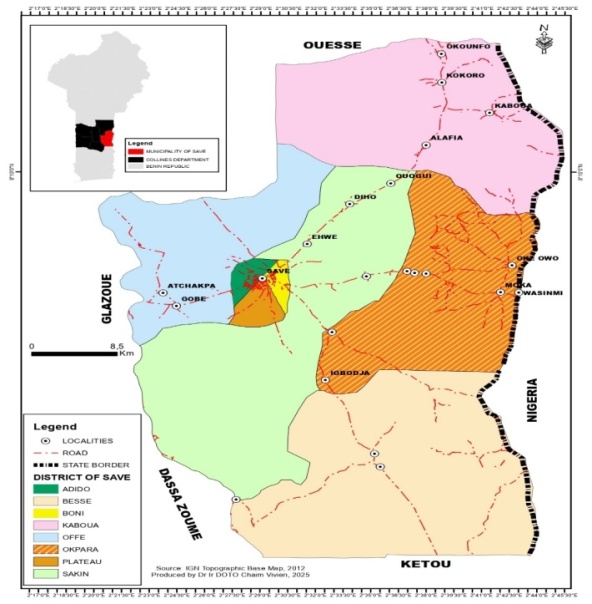
The municipality of Savè is situated in the Collines Department in central Benin, between 7°42′ and 8°45′ North latitude (Figure 1). It covers an area of approximately 2,228 km² and experiences a Sudano-Guinean climate, with a rainy season from April to October and a dry season from November to March.
The hydrographic network is dominated by the Ouémé River and several seasonal tributaries. The landscape is characterized by plateaus, rocky hills, and permeable sandy-clay soils, which favor rainfall infiltration and groundwater recharge.

Five sampling stations were selected to represent the main hydrological units of the Savè municipality, including major rivers (Ouémé and Okpara) and seasonal streams, while capturing a gradient of anthropogenic pressure ranging from agricultural zones and urbanized areas to relatively less disturbed environments. Station selection was based on water permanence, accessibility, hydrological significance, and the intensity of anthropogenic influences. The selected sites included Atchakpa-Bethel on the Ouémé River; Kaboua, Besse, and Igbodja on the Okpara River; and Atchakpa on the Sakin Stream. Although the number of sampling stations remains limited, this targeted and representative selection enabled the identification of dominant water quality patterns and major pollution hotspots across the municipality.
Sampling campaigns were conducted during the rainy season, when river flows are high and hydrological connectivity is enhanced, allowing for the assessment of water quality under conditions of maximal dilution and active transport of nutrients and contaminants. In situ measurements of temperature, electrical conductivity, total dissolved solids (TDS), dissolved oxygen, and pH were performed using a multiparameter probe and a portable pH meter (HANNA HI 98107). Water samples were collected between 08:00 and 12:00 in sterilized bottles, preserved at 4 °C, and transported to the laboratory for subsequent chemical analyses.
2.3. Laboratory AnalysesThe following parameters were analyzed: five-day biochemical oxygen demand (BOD₅), chemical oxygen demand (COD), nitrates (NO₃⁻), nitrites (NO₂⁻), ammonium (NH₄⁺), and orthophosphates (PO₄³⁻). All analyses were performed at the Laboratory of Ecology, Health and Animal Production (LEPSA), University of Parakou, using spectrophotometric methods with a HACH DR 1900 spectrophotometer, in accordance with standard procedures described by 20.
2.4. Statistical and Spatial AnalysisDescriptive statistical analyses and Pearson correlation coefficients were computed using data from the five sampling stations (n = 5). Given the limited sample size, correlation results were interpreted with caution and were used primarily to explore dominant physicochemical relationships rather than to infer causal links. All statistical analyses were performed using Microsoft Excel and R software 4.5.2 21, while the spatial distribution of water resources and sampling stations was analyzed through GIS-based mapping using ArcGIS.
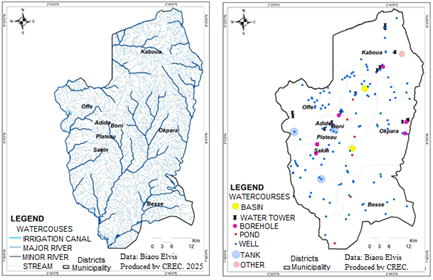
The Savè municipality possesses diverse water resources, including the Ouémé River, 23 tributaries, numerous seasonal streams, and groundwater accessed through wells and boreholes. However, their spatial distribution is uneven, with notable water scarcity in the Besse and Kaboua districts. The inventory also highlighted areas with significant but underexploited hydraulic potential, as well as zones vulnerable to anthropogenic or environmental pressures, such as pollution, overexploitation, and seasonal water deficits, particularly in the Sakin district (Figure 2).

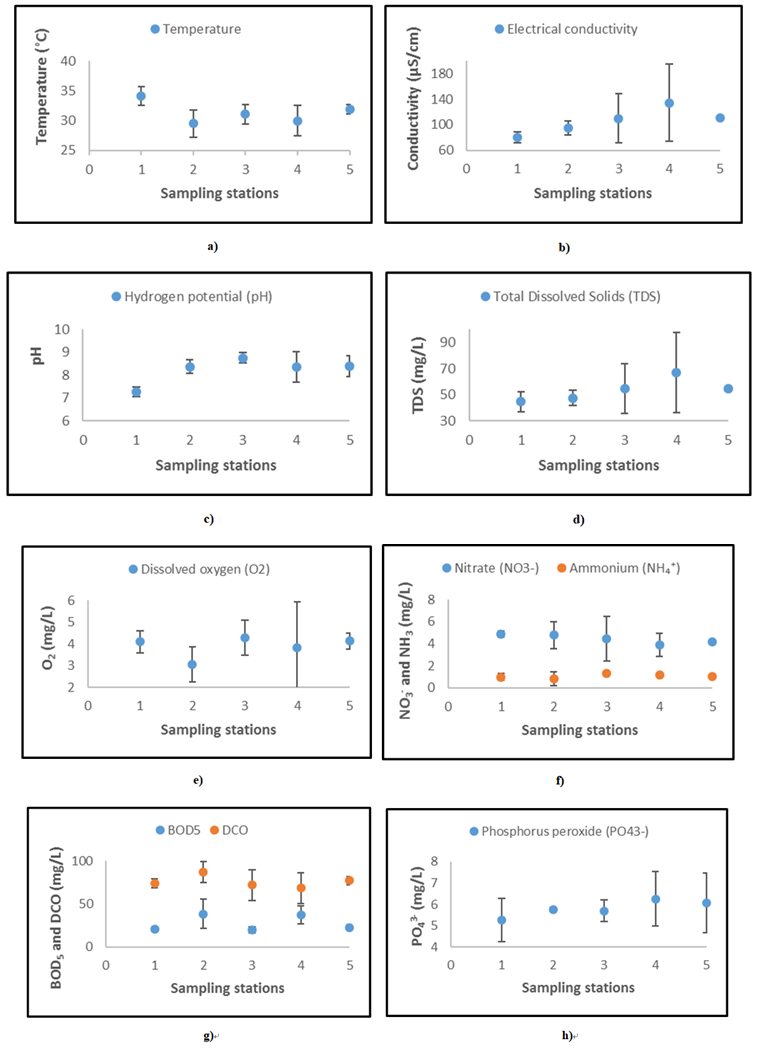
The graphs in Figure 3 illustrate the variations in physicochemical characteristics of the main surface water resources in the Savè municipality. Analysis of the measured parameters in the principal rivers (Ouémé, Okpara, and Sakin) reveals a widespread deterioration of water quality, with varying degrees of severity across the different sampling stations.

Recorded water temperatures are generally high (Figure 3-a), with averages ranging from 29.5 °C to 34.2 °C, reflecting a warm climatic context that promotes intensified biochemical processes. Some stations, notably Atchakpa-Bethel (Ouémé River), exhibit elevated but relatively stable temperatures, whereas others, such as Igbodja (Okpara River), display pronounced thermal variability. These fluctuations, combined with high temperatures, enhance dissolved oxygen consumption and increase ecological stress in aquatic environments.
Values of electrical conductivity (Figure 3-b) and TDS (Figure 3-d) indicate generally low to moderate mineralization, but with notable spatial variability. Atchakpa-Bethel is characterized by weakly mineralized waters, whereas Igbodja (Okpara River) exhibits the highest and most variable levels, reflecting irregular inputs of dissolved salts. The strong correlation between conductivity and TDS suggests common influencing factors, likely associated with domestic and agricultural discharges, as well as soil leaching.
The waters are predominantly slightly to moderately alkaline, with mean pH values ranging from 7.3 to 8.8 (Figure 3-c). This alkalinity is particularly pronounced at Besse, Kaboua, and Igbodja. The high variability observed at Igbodja and Atchakpa (Sakin Stream) suggests frequent chemical disturbances, potentially associated with intermittent anthropogenic inputs. Combined with elevated temperatures, these pH levels may also increase the toxicity of certain nitrogen species, particularly ammonium.
Dissolved oxygen concentrations are consistently below the 5 mg/L threshold (Figure 3-e), indicating poor ecological water quality. The Kaboua and Igbodja stations show the most critical levels, reflecting high oxygen consumption associated with the decomposition of organic matter. This situation highlights the low self-purification capacity of the rivers and significant stress on aquatic fauna.
The different forms of nitrogen indicate chronic nitrogen pollution (Figure 3-f). Nitrites (NO₂-), which are toxic, reach concerning concentrations, particularly at Besse (0.066 mg/L) and Kaboua (0.034 mg/L), suggesting incomplete nitrification and the presence of fresh organic pollution. Nitrates (NO₃-), although less toxic, occur at levels that may promote eutrophication, reflecting continuous inputs from agricultural fertilizers, animal waste, and domestic sewage. Ammonium (NH₄⁺) is present at alarming concentrations at all stations, posing an immediate threat to aquatic organisms, particularly under conditions of alkaline pH and elevated temperatures.
The very high values of five-day biochemical oxygen demand (BOD₅) and chemical oxygen demand (COD) confirm severe and widespread organic pollution (Figure 3-g). The Kaboua and Igbodja stations are particularly affected, exhibiting elevated organic loads indicative of untreated domestic, agricultural, or artisanal discharges. The high COD levels also suggest the presence of poorly biodegradable chemical pollutants, prolonging pollution persistence and increasing the risk of anoxic conditions.
Phosphate concentrations are extremely high at all stations, well above acceptable ecological thresholds (Figure 3-h). This indicates an advanced state of eutrophication driven by agricultural runoff and domestic discharges. Associated risks include algal and cyanobacterial blooms, oxygen depletion, and deterioration of water usability.
Overall, surface waters in the Savè municipality exhibit pronounced physicochemical degradation, characterized by intense organic and nutrient pollution, insufficient oxygenation, and a high risk of eutrophication. The Igbodja and Kaboua stations are particularly vulnerable. These findings underscore the urgent need for integrated management measures, including the reduction of untreated discharges, regulation of agricultural practices, and the implementation of monitoring and aquatic ecosystem restoration programs.
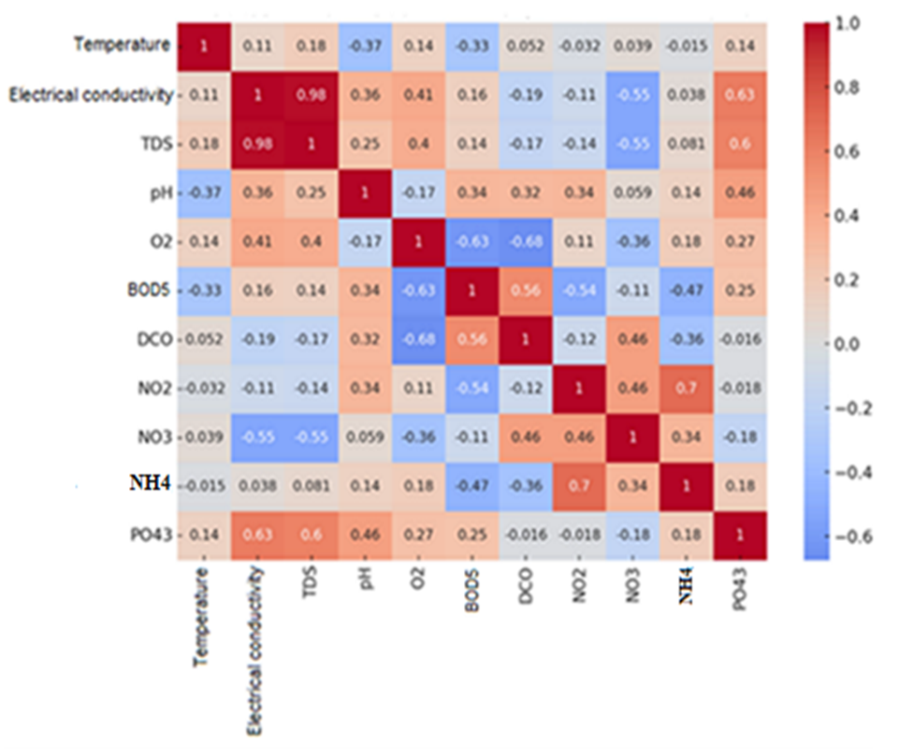
3.3. Integrated Analysis of Physicochemical ParametersThe Pearson correlation matrix indicates that the functioning of the rivers is strongly influenced by pollution pressures, reflecting the low resilience of the studied aquatic ecosystems. Figure 4 illustrates the interactions among physicochemical parameters.
The very strong correlation between electrical conductivity and TDS (r = 0.98) confirms that mineralization is largely driven by continuous anthropogenic inputs, indicating chronic accumulation of dissolved salts that persistently degrade water quality. Significant negative correlations between dissolved oxygen and organic pollution indicators (BOD₅: r = -0.63; COD: r = -0.36) demonstrate that organic load is the primary driver of deoxygenation, generating persistent ecological stress and limiting the self-purification capacity of the waters.
The positive correlation between BOD₅ and COD (r = 0.56) reflects the coexistence of biodegradable and persistent pollutants, prolonging oxygen consumption and delaying ecosystem recovery. Strong correlations among nitrogen species (NH₃ and NO₃-: r = 0.70; NO₂- and NO₃-: r = 0.46) indicate chronic nitrogen pollution associated with active but often incomplete nitrification, typical of already degraded and poorly oxygenated environments.
A moderate correlation between pH and phosphates (r = 0.46) highlights the influence of domestic and agricultural inputs, creating conditions favorable to eutrophication. Finally, the low contribution of temperature to the observed relationships confirms that water quality degradation is primarily driven by anthropogenic factors.
In summary, the correlation matrix reveals physicochemical interactions structured by persistent organic and nutrient pollution, resulting in deficient oxygenation, advanced eutrophication, and very limited ecological resilience of the rivers in the Savè municipality.
The results of this study provide an integrated assessment of water resources in the Savè municipality, highlighting heightened structural vulnerability and progressive qualitative degradation of waters under the combined influence of anthropogenic pressures and seasonal hydroclimatic variability.
4.1. Structural Vulnerability of Water ResourcesThe inventory reveals an apparent diversity of water sources; however, the population is heavily reliant on groundwater, particularly wells and boreholes, which increases vulnerability under conditions of hydrological variability and aquifer overexploitation. These structural dynamics are consistent with regional observations, where groundwater exhibits heightened sensitivity to seasonal fluctuations and anthropogenic pressures, especially in agricultural plains across West African countries 22. The concentration of water points in densely populated areas and regions of intensive agricultural activity further elevates the risk of cross‑contamination between surface and groundwater, thereby reducing local hydrological resilience.
Although this study primarily focused on surface waters rather than groundwater, these systems act as integrative indicators of catchment-scale anthropogenic pressures and serve as major pathways for contaminant transfer toward aquifers. Consequently, surface water quality provides indirect yet valuable insight into potential risks affecting groundwater resources, particularly given the hydraulic connectivity between rivers, streams, and shallow aquifers in the Collines region. The observed degradation in surface waters therefore raises concerns regarding the long-term sustainability of groundwater quality.
It is important to acknowledge that this study did not include direct multi-seasonal monitoring of groundwater. However, analogous analyses in similar contexts demonstrate the relevance of considering seasonal variability: 23 showed significant seasonal fluctuations in groundwater quality in drought-prone agricultural regions using GIS and integrated water quality indices (IWQI), highlighting the importance of both wet and dry seasons for understanding aquifer vulnerability. While this limitation restricts direct conclusions about groundwater quality dynamics, surface water assessments remain a robust proxy for evaluating catchment-level anthropogenic impacts.
Although quantitative land-use and demographic datasets were not directly integrated into this analysis, observed water quality patterns are consistent with known land-use characteristics of the Savè municipality, including intensive agriculture, expanding urban settlements, and limited sanitation coverage, as documented in regional studies on land use impacts on water quality 24, 25.
4.2. Mineralization and Agricultural PressuresThe strong correlation between electrical conductivity and total dissolved solids confirms that water mineralization is largely driven by anthropogenic solute inputs, notably through the percolation of mineral fertilizers and agricultural runoff. Studies in agricultural basins across West Africa indicate that nutrients from farming practices contribute significantly to the ionic load of both surface and groundwater, particularly during dry periods and transitional seasons 26. This chemical signature, characteristic of diffuse contaminant inputs, alters local physicochemical conditions and compromises the ecological stability of aquatic environments.
4.3. Deoxygenation and Organic OverloadObserved dissolved oxygen concentrations were consistently below the WHO recommended minimum threshold of 5 mg/L required for the protection of aquatic life 17, indicating severe ecological stress incompatible with the maintenance of diverse and functional aquatic communities. This pronounced deoxygenation, combined with elevated biochemical oxygen demand (BOD₅) and chemical oxygen demand (COD) levels, reflects excessive organic loading primarily associated with untreated domestic effluents, agricultural runoff, and the decomposition of organic matter. Similar patterns have been widely reported in anthropogenically impacted surface waters, where organic pollution constitutes a dominant driver of oxygen depletion 27. The accumulation of biodegradable organic matter intensifies microbial respiration, reduces the natural self-purification capacity of aquatic systems, and promotes localized anoxic conditions, thereby serving as a robust indicator of advanced water quality degradation at the regional scale.
Beyond ecological impairment, elevated organic loads also entail direct public health implications. Although microbiological indicators such as fecal coliforms or Escherichia coli were not measured in the present study, numerous investigations conducted in Benin 28, 29 have consistently documented widespread microbial contamination of both surface and groundwater, particularly in areas characterized by inadequate sanitation infrastructure and high population density. In this context, the very high BOD₅ and COD values observed strongly suggest favorable conditions for the survival and proliferation of pathogenic microorganisms. This risk is likely exacerbated during low-flow periods, when reduced dilution capacity enhances contaminant concentrations and increases human exposure potential.
4.4. Nitrogen Pollution and Disruption of the Nitrogen CycleHigh concentrations of ammonium, nitrites, and nitrates, along with their significant correlations, indicate chronic nitrogen pollution associated with active but incomplete nitrification. Ammonium concentrations exceeded WHO guideline values for surface waters, particularly under alkaline pH and high temperature conditions, increasing toxicity risks 17. These conditions are characteristic of environments receiving continuous nitrogenous organic matter inputs, such as domestic effluents and animal waste, and are widespread in agricultural water systems in sub-Saharan Africa 23. The coexistence of elevated levels of different nitrogen compounds suggests insufficient oxygenation, hindering completion of the nitrogen cycle and sustaining persistent reducing conditions driven by high organic loads.
4.5. Phosphate Enrichment and EutrophicationThe elevated phosphate concentrations observed at all stations indicate advanced eutrophication, well above recommended ecological thresholds for freshwater ecosystems. Nutrient enrichment (nitrogen and phosphorus) from agricultural fertilizer runoff and domestic effluents drives algal proliferation and subsequent dissolved oxygen depletion during biomass decomposition, a dynamic commonly observed in rural sub-Saharan water systems 30. This process establishes a feedback loop of ecological degradation, limiting natural recovery without targeted management interventions.
4.6. Overall Implications, Limitations, and Management PerspectivesOverall, the rivers of the Savè municipality function under chronic disturbance, characterized by continuous pollutant inputs, deficient oxygenation, and advanced eutrophication. These patterns are consistent with regional trends of rural water resource degradation observed in Benin and across West Africa, driven by agricultural intensification, population growth, climate variability, and inadequate sanitation infrastructure 22. Although water resources in Savè remain quantitatively available, their physicochemical quality is generally insufficient for sustainable use without appropriate treatment.
The limited number of sampling stations constitutes an inherent constraint for capturing fine-scale spatial heterogeneity in water quality across the municipality. However, the convergence and consistency of degradation patterns observed across distinct hydrological systems, including major rivers and seasonal streams subjected to varying degrees of anthropogenic pressure, indicate that the identified physicochemical processes are not site-specific anomalies but rather reflect structurally representative surface water dynamics at the municipal scale. Consequently, despite these spatial limitations, the results provide a robust basis for interpreting dominant pollution processes and for formulating relevant and context-appropriate water resource management implications.
It is also important to note that the water sampling campaigns were conducted during the rainy season, a period characterized by increased river flows and enhanced hydrological connectivity. This season was deliberately targeted in line with the findings of 8, who demonstrated that peak rainfall periods strongly influence pollutant mobilization through runoff and erosion, resulting in substantial variations in surface water quality. Sampling during the rainy season enabled the assessment of water quality under conditions of maximal dilution and active transport of nutrients and contaminants, thereby complementing previous studies focused on dry-season worst-case scenarios. Nevertheless, seasonal variability was not fully captured through multi-season sampling, and this limitation should be considered when extrapolating the present findings to other hydrological periods.
Taken together, these findings underscore the urgent need for an integrated water resources management approach in the Savè municipality. Priority actions should include: (i) reduction of pollution at the source through improved agricultural practices, optimized fertilizer application, and effective waste management; (ii) restoration and protection of riparian buffer zones; (iii) development of decentralized sanitation solutions adapted to rural contexts; and (iv) strengthening of local water governance through the active involvement of all stakeholders. Such an integrated approach is essential to mitigate the cumulative impacts of anthropogenic and hydroclimatic pressures on Savè’s water systems and to promote the long-term sustainability of aquatic ecosystems. Future research incorporating multi-season sampling, including dry- and transitional-season assessments, would further enhance understanding of temporal water quality variability and support the design of adaptive and resilient water management strategies.
This study provides an integrated assessment of water resources in the Savè municipality by combining a comprehensive inventory of water resources with physicochemical characterization and statistical analyses. The results reveal a marked spatial heterogeneity in water resource distribution, with a strong dependence on groundwater, while surface waters, often seasonal, exhibit generally degraded physicochemical quality.
Elevated concentrations of organic pollution indicators (BOD₅ and COD) and nitrogenous and phosphorus nutrients (NH₃, NO₂⁻, NO₃⁻, and PO₄³⁻), coupled with low dissolved oxygen levels, indicate significant organic and nutrient loading. These conditions reflect the combined effects of untreated domestic wastewater discharges, intensive agricultural activities, and diffuse runoff. Such pressures compromise the self-purification capacity of aquatic systems and reduce their ecological resilience. Pearson correlation analyses further confirm the dominant influence of anthropogenic activities on the observed physicochemical patterns.
Although microbiological indicators such as fecal coliforms and Escherichia coli were not assessed, the very high levels of organic pollution strongly suggest potential microbiological contamination, raising concerns for public health. Future studies should therefore incorporate microbiological analyses to improve health risk assessments and strengthen drinking water safety management.
Overall, these findings underscore the urgent need to reinforce local water governance through enhanced water quality monitoring, the promotion of improved sanitation practices, and the implementation of an integrated municipal water resources management plan. Despite limitations related to the limited number of sampling stations and the absence of microbiological data, this study provides a scientifically sound basis for informing sustainable water management strategies in Savè and similar rural contexts.
This research was made possible through the collaborative efforts of the Town Hall of the Savè Municipality and the School of Rural Engineering at the National University of Agriculture, whose valuable contributions are gratefully acknowledged.
The authors hereby declare that there are no financial, personal, or professional conflicts of interest that could have influenced the research, authorship, or publication of this study.
| [1] | FAO, La situation mondiale de l’alimentation et de l’agriculture : changement climatique, agriculture et sécurité alimentaire, Rome, Italie, 214p., 2016. https:// openknowledge.fao.org/ server/api/ core/bitstreams/6ecc4fb3-c5e2-4230-9483-44277ab081ab/content [Accessed December 15, 2025]. | ||
| In article | |||
| [2] | Asaaga, F.A., Shakeer, I., Sriram, A., Chhotaria, K., Dutta, S., Narayanaswamy, D., Amankwaa, G., Chanda, M.M., Hoti, S.L., Young, J.C., Purse, B.V., Ties that bind: understanding One Health networks and participation for zoonoses prevention and control in India. One Health Outlook, 6(24), 2024. | ||
| In article | View Article PubMed | ||
| [3] | IPCC, Climate Change 2023: Synthesis Report. Contribution of Working Groups I, II and III to the Sixth Assessment Report of the Intergovernmental Panel on Climate Change [Core Writing Team, H. Lee and J. Romero (eds.)]. IPCC, Geneva, Switzerland, 184p., 2023. | ||
| In article | |||
| [4] | Kpegli, K.A.R., Adandedji, F., Ahouandogbo, C., Djihouessi, M.B., Hounkpe, J., N’Tcha M’Po, Y., Bossa, A.Y., Alassane, A., Sintondji, L.O., Mama, D., Boukari, M., Groundwater Recharge Assessment in Central Benin: The Case of the Collines Region (West Africa). Water, 16(10), 1330, 2024. | ||
| In article | View Article | ||
| [5] | Mohamed, A.S., Leduc, C., Yeslem, S., Tagarinska, G., Aichete, S., Impacts of climate variations and human influences on groundwater recharge in the semi-arid Trarza aquifer (SW Mauritania). Proceeding of IAHS, 385, 351–357, 2024. | ||
| In article | View Article | ||
| [6] | Mampo, A.M.G., Guedje, K.F., Merz, B., Obada, E., Guntu, R.K., Yarou, H., Alamou, A.E., Hounkpe, J., Rainfall and streamflow variability in North Benin, West Africa, and its multiscale association with climate teleconnections, Journal of Hydrology: Regional Studies, 59, 102319, 2025. | ||
| In article | View Article | ||
| [7] | Tefera, M.L., Seddaiu, G., Carletti, A., Awada, H., Rainfall variability and drought in West Africa: challenges and implications for rainfed agriculture. Theoretical and Applied Climatology, 156(41), (2025). | ||
| In article | View Article | ||
| [8] | Gouton, R.R.T., Abahi, K.S., Gnohossou, P.M., Akodogbo, H.H. Évaluation des variations spatio-temporelles de la qualité des eaux de la rivière Okpara au Bénin. International Journal of Biological and Chemical Sciences, 19(1), 384–393. | ||
| In article | View Article | ||
| [9] | Djihouessi, M.B., Degan, A., Yekanbessoun, N.M., Sossou, M., Sossa, F., Adanguidi, J., Aina, M.P., Inventory of agroecosystem services and perceptions of potential implications due to climate change: A case study from Benin in West Africa, Environmental Impact Assessment Review, 95, 106792, 2022. | ||
| In article | View Article | ||
| [10] | Chabi, A., Zandagba, E.B.J., Obada, E., Biao, E.I., Alamou, E.A., Afouda, A., Impact of climate change on water availability in the Ouémé catchment at the outlet of Savè’s bridge (Benin, West Africa). Proceedings of IAHS, 384, 255-262, 2021. | ||
| In article | View Article | ||
| [11] | Ogouwale, R., Agbon, C., Gomez, A.C., Issa, M.-S., Modélisation prospective de la disponibilité des ressources en eau dans le bassin versant de l’Okpara [Article]. Revue Ivoirienne des Sciences et Technologies, 27, 261–277, 2016. https:// revist.net/ REVIST_27/ REVIST_27_20.pdf | ||
| In article | |||
| [12] | Badou, D.F., Nouvewa, C., Allé, C., Adango, A.M., Sintondji, L.O., Ensuring irrigation water availability for off-season vegetable production in the face of competition from rural domestic water supplies in the commune of Lalo (Benin), Agricultural Water Management, 308, 109282, 2025. | ||
| In article | View Article | ||
| [13] | Francisco, A.R., Yarou, B.B., D. Aboubakar Souna, D., De Troij, A. Touré, F., Togbé, D.R., Edoh Ognakossan, K., Belmin, R., Martin, T., Le Bellec, F., Water management and irrigation systems in vegetable production in West Africa. Acta Horticulturae, 1422(28). | ||
| In article | |||
| [14] | Fassinou, N.M., Gouissi, F.M., Goura, S.O., Yessoufou, W.B., Biaou, T.S., Kakpo, K.H., Akodogbo, H.H., Toffa, D.D., Impacts de la contamination agricole sur la qualité physico‑chimique des eaux de surface de l’Ouémé supérieur au Bénin. European Scientific Journal, 19(9), 102. | ||
| In article | View Article | ||
| [15] | Wekesa, P.M., Nzioka, J.M., Mutune, J.M., Barriers and Enablers of Adoption of Rain Water Harvesting Technologies at County Levels: A Case of Matungulu Sub‑County, Machakos County, Kenya. East African Journal of Science, Technology and Innovation, 3(2), 2022. | ||
| In article | View Article | ||
| [16] | Andoh, C., Gupta, S., Khare, D., Status of Rainwater Harvesting (RWH) in Ghana. Current World Environment, 13(1), 2018. | ||
| In article | View Article | ||
| [17] | Ministère de la Santé. (2022a). Qualité de l’eau de consommation au Bénin: Rapport national 2021-2022, Pseau, 78p., 2022.https:// www.pseau.org/ outils/ouvrages/ ministere_de_la_sante_ qualite_de_l_ eau_de_consommation _au_benin_en_2022 _2023.pdf [Accessed December 15, 2025]. | ||
| In article | |||
| [18] | Ministère de la Santé. (2022b). Programme national de surveillance de la qualité de l’eau de consommation 2021-2022 au Bénin, Pseau, 31p., 2022. https:// www.pseau.org/ outils/ ouvrages/ ministere_de_ la_sante_programme_ national_de_ surveillance_ de_la_qualite_de_l_ eau_de_consommation_2021_2022 _au_benin_2021. pdf [Accessed December 15, 2025]. | ||
| In article | |||
| [19] | ACED Africa. (2021). Étude de la qualité chimique et bactérienne des ressources en eau à Hozin, arrondissement de la commune de Dangbo, Bénin. ACED Africa. https:// acedafrica.org/ evidences/ etude-de-la-qualite- chimique-et- bacteriologique-des- ressources-en-eau-a-hozin-arrondissement- de-la-commune-de-dangbo-au-benin [Accessed December 15, 2025]. | ||
| In article | |||
| [20] | Rodier, J, Legube, B, Merlet, N., L’analyse de l’eau : contrôle et interprétation, Dunod, Paris., 1526 p., 2016. | ||
| In article | |||
| [21] | R Core Team, R: A Language and Environment for Statistical Computing (Version 4.5.2) [Software]. R Foundation for Statistical Computing, Vienna, Austria., 3948p., 2025. https:// www.R-project.org/ [Accessed January 08, 2026] | ||
| In article | |||
| [22] | Koudenoukpo, Z.C., Odountan, O.H., Guo, C., Guo, C., Céréghino, R., Chikou, A., Park, Y.-S., Understanding the patterns and processes underlying water quality and pollution risk in West–Africa River using self-organizing maps and multivariate analyses. Environmental Science and Pollution Research, 30, 11893–11912, 2023. | ||
| In article | View Article PubMed | ||
| [23] | Laoufi, A., Guettaia, S., Boudjema, A., Derdour, A., Almalki, A.S., Bojer, A.K., El-Nagdy, K.A., Ali, E., Seasonal groundwater quality analysis in a drought prone agricultural region using GIS and IWQI for nitrate contamination insights. Scientific Reports, 15, 22948, 2025. | ||
| In article | View Article PubMed | ||
| [24] | Tahiru, A.A., Doke, D.A., Baatuuwie, B.N., Effect of land use and land cover changes on water quality in the Nawuni Catchment of the White Volta Basin, Northern Region, Ghana. Applied Water Science, 10(198), 2020. | ||
| In article | View Article | ||
| [25] | Socohou, A.A., Djihouessi, M.B., Tigo, B.A., Viainon, V.M., Adandedji, F.M., Adounpke, J., Aina, M.P., Spatio-temporal dynamics of nutrients at the water-sediment interface: case of the Nokoue lagoon in Southern Benin. Environmental Monitoring and Assessment, 196(2), 2024. | ||
| In article | View Article PubMed | ||
| [26] | Saturday, A., Herrnegger, M., Kangume, S., Stecher, G., Spatiotemporal variability of surface water quality in tropical agriculture-dominated catchments: insights from water quality indices. Scientific Reports, 15, 42971, 2025. | ||
| In article | View Article PubMed | ||
| [27] | World Bank, Determinants of Declining Water Quality, Washington, DC 20433, USA, 48p., 2019. https:// openknowledge.worldbank.org/ server/api/core/bitstreams/ 40396ad5-ea02-52da-bbb3-b4c19b1c330b/ content? utm_ source= chatgpt.com [Accessed December 16, 2025]. | ||
| In article | |||
| [28] | Dan, O., Ahouansou, D., Sintondji, L. (2022) Evaluation of the Microbiological Quality of Drinking Water and Health Risks in the Commune of Sô-Ava, in Southern Benin (Evaluation De La Qualité Microbiologique Des Eaux De Boisson Et Risques Sanitaires Dans La Commune De Sô-Ava, Au Sud-Bénin). Journal of Water Resource and Protection, 14, 501-514, 2022. | ||
| In article | View Article | ||
| [29] | Gbèssohèlè, J.B., Avocefohoun, A.S., Tchogou, A.P., Zannou, S.D., Montcho, P.S., Alohoutade, P.S., Chabi., W.N., Assessment of the Microbiological Quality of Well and Borehole Water in the Municipality of Sèmè-Podji, Benin. International Journal of Current Microbiology and Applied Sciences 13(7): 243-252, 2024. | ||
| In article | View Article | ||
| [30] | Garno, Y. S., Prayogo, T., Dewa, R. P., Widodo, L., Riyadi, A., Susanto, J. P., Iskandar, I., Kendarto, D. R., Haryanti, H., Adhi, R. P., Habibie, M. I., Fernando, D., Suwedi, N., Budiman, B., Tresnadi, H., Impact of Anthropogenic Activities on Water Quality, Pollutant Diffusion in Lake Waters, and the Level of Eutrophication: the Case of Batur Lake, Indonesia. Polish Journal of Environmental Studies. | ||
| In article | |||
Published with license by Science and Education Publishing, Copyright © 2026 Chaim Vivien DOTO, Olanyan Elvis Heribert BIAOU, Dogbè Clément ADJAHOUINOU and Hyppolite AGADJIHOUEDE
 This work is licensed under a Creative Commons Attribution 4.0 International License. To view a copy of this license, visit
http://creativecommons.org/licenses/by/4.0/
This work is licensed under a Creative Commons Attribution 4.0 International License. To view a copy of this license, visit
http://creativecommons.org/licenses/by/4.0/
| [1] | FAO, La situation mondiale de l’alimentation et de l’agriculture : changement climatique, agriculture et sécurité alimentaire, Rome, Italie, 214p., 2016. https:// openknowledge.fao.org/ server/api/ core/bitstreams/6ecc4fb3-c5e2-4230-9483-44277ab081ab/content [Accessed December 15, 2025]. | ||
| In article | |||
| [2] | Asaaga, F.A., Shakeer, I., Sriram, A., Chhotaria, K., Dutta, S., Narayanaswamy, D., Amankwaa, G., Chanda, M.M., Hoti, S.L., Young, J.C., Purse, B.V., Ties that bind: understanding One Health networks and participation for zoonoses prevention and control in India. One Health Outlook, 6(24), 2024. | ||
| In article | View Article PubMed | ||
| [3] | IPCC, Climate Change 2023: Synthesis Report. Contribution of Working Groups I, II and III to the Sixth Assessment Report of the Intergovernmental Panel on Climate Change [Core Writing Team, H. Lee and J. Romero (eds.)]. IPCC, Geneva, Switzerland, 184p., 2023. | ||
| In article | |||
| [4] | Kpegli, K.A.R., Adandedji, F., Ahouandogbo, C., Djihouessi, M.B., Hounkpe, J., N’Tcha M’Po, Y., Bossa, A.Y., Alassane, A., Sintondji, L.O., Mama, D., Boukari, M., Groundwater Recharge Assessment in Central Benin: The Case of the Collines Region (West Africa). Water, 16(10), 1330, 2024. | ||
| In article | View Article | ||
| [5] | Mohamed, A.S., Leduc, C., Yeslem, S., Tagarinska, G., Aichete, S., Impacts of climate variations and human influences on groundwater recharge in the semi-arid Trarza aquifer (SW Mauritania). Proceeding of IAHS, 385, 351–357, 2024. | ||
| In article | View Article | ||
| [6] | Mampo, A.M.G., Guedje, K.F., Merz, B., Obada, E., Guntu, R.K., Yarou, H., Alamou, A.E., Hounkpe, J., Rainfall and streamflow variability in North Benin, West Africa, and its multiscale association with climate teleconnections, Journal of Hydrology: Regional Studies, 59, 102319, 2025. | ||
| In article | View Article | ||
| [7] | Tefera, M.L., Seddaiu, G., Carletti, A., Awada, H., Rainfall variability and drought in West Africa: challenges and implications for rainfed agriculture. Theoretical and Applied Climatology, 156(41), (2025). | ||
| In article | View Article | ||
| [8] | Gouton, R.R.T., Abahi, K.S., Gnohossou, P.M., Akodogbo, H.H. Évaluation des variations spatio-temporelles de la qualité des eaux de la rivière Okpara au Bénin. International Journal of Biological and Chemical Sciences, 19(1), 384–393. | ||
| In article | View Article | ||
| [9] | Djihouessi, M.B., Degan, A., Yekanbessoun, N.M., Sossou, M., Sossa, F., Adanguidi, J., Aina, M.P., Inventory of agroecosystem services and perceptions of potential implications due to climate change: A case study from Benin in West Africa, Environmental Impact Assessment Review, 95, 106792, 2022. | ||
| In article | View Article | ||
| [10] | Chabi, A., Zandagba, E.B.J., Obada, E., Biao, E.I., Alamou, E.A., Afouda, A., Impact of climate change on water availability in the Ouémé catchment at the outlet of Savè’s bridge (Benin, West Africa). Proceedings of IAHS, 384, 255-262, 2021. | ||
| In article | View Article | ||
| [11] | Ogouwale, R., Agbon, C., Gomez, A.C., Issa, M.-S., Modélisation prospective de la disponibilité des ressources en eau dans le bassin versant de l’Okpara [Article]. Revue Ivoirienne des Sciences et Technologies, 27, 261–277, 2016. https:// revist.net/ REVIST_27/ REVIST_27_20.pdf | ||
| In article | |||
| [12] | Badou, D.F., Nouvewa, C., Allé, C., Adango, A.M., Sintondji, L.O., Ensuring irrigation water availability for off-season vegetable production in the face of competition from rural domestic water supplies in the commune of Lalo (Benin), Agricultural Water Management, 308, 109282, 2025. | ||
| In article | View Article | ||
| [13] | Francisco, A.R., Yarou, B.B., D. Aboubakar Souna, D., De Troij, A. Touré, F., Togbé, D.R., Edoh Ognakossan, K., Belmin, R., Martin, T., Le Bellec, F., Water management and irrigation systems in vegetable production in West Africa. Acta Horticulturae, 1422(28). | ||
| In article | |||
| [14] | Fassinou, N.M., Gouissi, F.M., Goura, S.O., Yessoufou, W.B., Biaou, T.S., Kakpo, K.H., Akodogbo, H.H., Toffa, D.D., Impacts de la contamination agricole sur la qualité physico‑chimique des eaux de surface de l’Ouémé supérieur au Bénin. European Scientific Journal, 19(9), 102. | ||
| In article | View Article | ||
| [15] | Wekesa, P.M., Nzioka, J.M., Mutune, J.M., Barriers and Enablers of Adoption of Rain Water Harvesting Technologies at County Levels: A Case of Matungulu Sub‑County, Machakos County, Kenya. East African Journal of Science, Technology and Innovation, 3(2), 2022. | ||
| In article | View Article | ||
| [16] | Andoh, C., Gupta, S., Khare, D., Status of Rainwater Harvesting (RWH) in Ghana. Current World Environment, 13(1), 2018. | ||
| In article | View Article | ||
| [17] | Ministère de la Santé. (2022a). Qualité de l’eau de consommation au Bénin: Rapport national 2021-2022, Pseau, 78p., 2022.https:// www.pseau.org/ outils/ouvrages/ ministere_de_la_sante_ qualite_de_l_ eau_de_consommation _au_benin_en_2022 _2023.pdf [Accessed December 15, 2025]. | ||
| In article | |||
| [18] | Ministère de la Santé. (2022b). Programme national de surveillance de la qualité de l’eau de consommation 2021-2022 au Bénin, Pseau, 31p., 2022. https:// www.pseau.org/ outils/ ouvrages/ ministere_de_ la_sante_programme_ national_de_ surveillance_ de_la_qualite_de_l_ eau_de_consommation_2021_2022 _au_benin_2021. pdf [Accessed December 15, 2025]. | ||
| In article | |||
| [19] | ACED Africa. (2021). Étude de la qualité chimique et bactérienne des ressources en eau à Hozin, arrondissement de la commune de Dangbo, Bénin. ACED Africa. https:// acedafrica.org/ evidences/ etude-de-la-qualite- chimique-et- bacteriologique-des- ressources-en-eau-a-hozin-arrondissement- de-la-commune-de-dangbo-au-benin [Accessed December 15, 2025]. | ||
| In article | |||
| [20] | Rodier, J, Legube, B, Merlet, N., L’analyse de l’eau : contrôle et interprétation, Dunod, Paris., 1526 p., 2016. | ||
| In article | |||
| [21] | R Core Team, R: A Language and Environment for Statistical Computing (Version 4.5.2) [Software]. R Foundation for Statistical Computing, Vienna, Austria., 3948p., 2025. https:// www.R-project.org/ [Accessed January 08, 2026] | ||
| In article | |||
| [22] | Koudenoukpo, Z.C., Odountan, O.H., Guo, C., Guo, C., Céréghino, R., Chikou, A., Park, Y.-S., Understanding the patterns and processes underlying water quality and pollution risk in West–Africa River using self-organizing maps and multivariate analyses. Environmental Science and Pollution Research, 30, 11893–11912, 2023. | ||
| In article | View Article PubMed | ||
| [23] | Laoufi, A., Guettaia, S., Boudjema, A., Derdour, A., Almalki, A.S., Bojer, A.K., El-Nagdy, K.A., Ali, E., Seasonal groundwater quality analysis in a drought prone agricultural region using GIS and IWQI for nitrate contamination insights. Scientific Reports, 15, 22948, 2025. | ||
| In article | View Article PubMed | ||
| [24] | Tahiru, A.A., Doke, D.A., Baatuuwie, B.N., Effect of land use and land cover changes on water quality in the Nawuni Catchment of the White Volta Basin, Northern Region, Ghana. Applied Water Science, 10(198), 2020. | ||
| In article | View Article | ||
| [25] | Socohou, A.A., Djihouessi, M.B., Tigo, B.A., Viainon, V.M., Adandedji, F.M., Adounpke, J., Aina, M.P., Spatio-temporal dynamics of nutrients at the water-sediment interface: case of the Nokoue lagoon in Southern Benin. Environmental Monitoring and Assessment, 196(2), 2024. | ||
| In article | View Article PubMed | ||
| [26] | Saturday, A., Herrnegger, M., Kangume, S., Stecher, G., Spatiotemporal variability of surface water quality in tropical agriculture-dominated catchments: insights from water quality indices. Scientific Reports, 15, 42971, 2025. | ||
| In article | View Article PubMed | ||
| [27] | World Bank, Determinants of Declining Water Quality, Washington, DC 20433, USA, 48p., 2019. https:// openknowledge.worldbank.org/ server/api/core/bitstreams/ 40396ad5-ea02-52da-bbb3-b4c19b1c330b/ content? utm_ source= chatgpt.com [Accessed December 16, 2025]. | ||
| In article | |||
| [28] | Dan, O., Ahouansou, D., Sintondji, L. (2022) Evaluation of the Microbiological Quality of Drinking Water and Health Risks in the Commune of Sô-Ava, in Southern Benin (Evaluation De La Qualité Microbiologique Des Eaux De Boisson Et Risques Sanitaires Dans La Commune De Sô-Ava, Au Sud-Bénin). Journal of Water Resource and Protection, 14, 501-514, 2022. | ||
| In article | View Article | ||
| [29] | Gbèssohèlè, J.B., Avocefohoun, A.S., Tchogou, A.P., Zannou, S.D., Montcho, P.S., Alohoutade, P.S., Chabi., W.N., Assessment of the Microbiological Quality of Well and Borehole Water in the Municipality of Sèmè-Podji, Benin. International Journal of Current Microbiology and Applied Sciences 13(7): 243-252, 2024. | ||
| In article | View Article | ||
| [30] | Garno, Y. S., Prayogo, T., Dewa, R. P., Widodo, L., Riyadi, A., Susanto, J. P., Iskandar, I., Kendarto, D. R., Haryanti, H., Adhi, R. P., Habibie, M. I., Fernando, D., Suwedi, N., Budiman, B., Tresnadi, H., Impact of Anthropogenic Activities on Water Quality, Pollutant Diffusion in Lake Waters, and the Level of Eutrophication: the Case of Batur Lake, Indonesia. Polish Journal of Environmental Studies. | ||
| In article | |||